Blog
Small Business from Home: 10 Ideas, Homemade and Low-Cost
Find ideas on small business from home, from homemade bakes to online tutoring, with startup costs in rupees and who each suits.
Published October 29, 2026
The best ideas on small business from home share three traits. You already have the skill, you can start for under ₹30,000, and you can reach your first customers this month. For most readers in India, that points to ten options. Bake cakes, make pickles or craft gifts if you like working with your hands. Sew if you have a machine. Teach, freelance, keep books or coach if you prefer a laptop. Run workshops or sell digital products if you want income that does not depend on stock.
The problem is rarely a shortage of ideas. Most lists give you fifty options with no costs, no first steps and no sense of who each one suits, so you close the tab and pick nothing. You also hear that you need a website, a logo and a loan before you begin. You do not.
This guide covers ten ideas, including the homemade small business ideas at home that start on a kitchen counter. Each one shows what you need, a rough rupee budget and the kind of person it fits. The last section helps you choose, take orders and payments, and check the legal basics. Pi-Square, which lets small sellers take orders, bookings and payments through one link, comes up only where it genuinely helps.
1. Home bakery and cakes
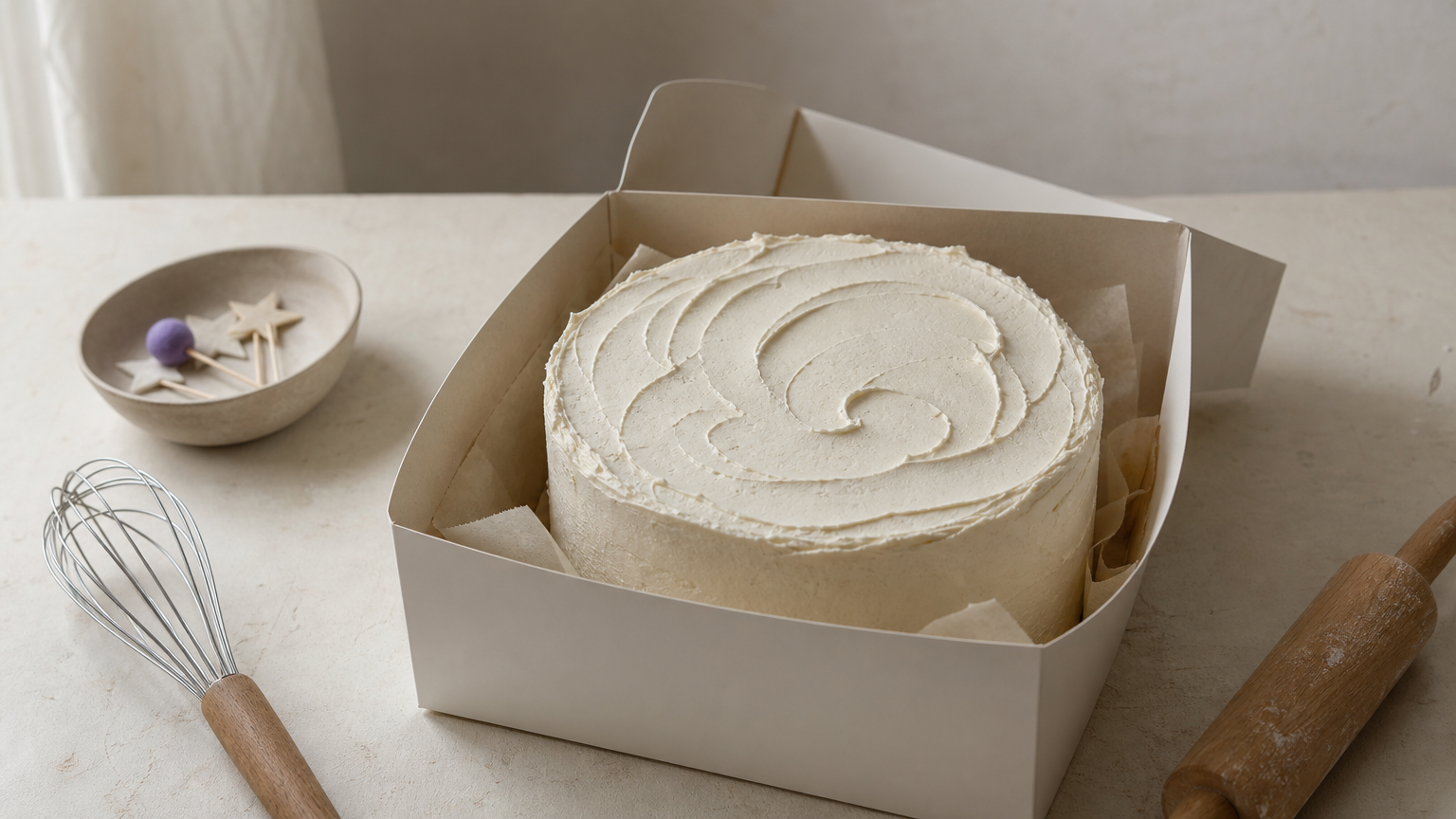
A home bakery sells cakes, cookies and brownies made in your own kitchen. It is the most natural homemade small business idea if people already ask you to bake for their parties. Orders are local, repeat business is common, and you can begin with equipment you may already own.
How it works and what you need
You take pre-orders for birthdays, anniversaries and festivals, bake to order and deliver or arrange pickup. Because every cake is sold before you bake it, you carry no unsold stock, which is the biggest risk in any food business.
- A working oven, a mixer, moulds and basic baking tools
- Boxes, boards and labels that look professional
- FSSAI registration, which food businesses need even when they operate from home
- Photos of five or six signature items
Cost and who it suits
Plan for ₹10,000 to ₹30,000 if you must buy an oven and a mixer, and far less if your kitchen is already equipped. Here is an example. A 1 kg cake sold at ₹900 with ₹350 of ingredients and packaging leaves ₹550. Twelve such cakes in a month give ₹6,600 before your time, gas and delivery.
This idea suits you if friends and relatives already ask you to bake for them. Most customers will message you on WhatsApp, so set up upsells early. With WhatsApp Business connected to Pi-Square, it suggests add-ons such as candles or a topper during ordering. If a customer adds ₹150 of extras to a ₹900 cake, the 10% upsell charge applies only to the extra ₹150, which is ₹15.
Take orders in advance and a home bakery never carries unsold stock.
2. Homemade pickles, snacks and masalas
Packaged homemade foods such as pickles, namkeen, chutney powders and masala blends last longer than cakes, so you can sell them beyond your neighborhood. That makes this a stronger choice than baking if you want customers in other cities.
How it works and what you need
You cook in small batches, pack in labeled jars or pouches, and sell through friends, building groups and courier parcels. Start with three or four products, because every extra recipe adds ingredients, labels and testing.
- FSSAI registration and labels showing ingredients, weight, dates and your FSSAI number
- Food-grade jars or pouches with tamper-proof seals
- Test batches to confirm shelf life before you sell
- A courier partner for parcels
Cost and who it suits
Budget ₹5,000 to ₹15,000 for ingredients, packaging and the first labels. Margins improve once you buy spices and oil in bulk, but cash gets tied up in stock. Cook a second batch only after the first one sells.
This is the right pick if you own a family recipe that people praise and you have the patience to standardize it. Taste must match in every jar, so weigh ingredients instead of cooking by eye. A customer who orders twice has usually decided your product is reliable, and that decision rests on consistency.
A pickle that tastes the same in every jar earns repeat orders.
3. Customized gifts and hampers
Customized gifts, such as handmade candles, name frames, resin coasters and festival hampers, sell because buyers pay extra for something made for one person. You make or assemble each piece to order, which keeps your stock small.
How it works and what you need
Choose one gifting occasion to begin, such as weddings, Diwali or Raksha Bandhan, and build three or four designs around it. Buy blanks such as plain frames, jars and boxes in small quantities, then personalize them yourself.
- Craft materials or blank items from a wholesale supplier
- Gift boxes, ribbons and tissue
- Photos of finished pieces on a plain background
- A clear cutoff date for festival orders
Cost and who it suits
Expect to spend ₹3,000 to ₹10,000 at the start. A common pricing rule is two to three times your material cost, but check that the price also pays for your hours, because personalization takes time. A ₹200 set of materials priced at ₹500 to ₹600 looks fine until a piece takes three hours to finish.
This idea suits creative people who enjoy detail work. Customers usually want a name, a message or a date on the gift, so your order process must capture it. Pi-Square’s custom notes, gift packing options and add-ons record those details inside the order, so you do not scroll through chats to find who wanted what.
Capture the name, message and date at order time, not afterward.
4. Tailoring and boutique work
Tailoring means stitching blouses, kurtas and kidswear, and doing alterations, for customers who come to your home. It is a proven small business from home because fitted clothing is always in demand and happy customers return every season.

How it works and what you need
Customers bring fabric or buy it from you, you take measurements, set a delivery date and stitch. Alterations are the fastest way to start, because they need no designs, only skill and a machine.
- A reliable sewing machine and basic tools
- A measurement register with each customer’s details
- Suppliers for fabric, lace and buttons if you do boutique orders
- A sheet or notebook that tracks every due date
Cost and who it suits
A basic setup costs ₹5,000 to ₹20,000, mostly for the machine, and almost nothing if you already own one. Take an advance on custom pieces to cover fabric and to filter out casual enquiries.
It suits you if you already sew well and can keep deadlines. Festival and wedding seasons bring a rush, so decide how many pieces you can finish and stop taking orders at that number. Turning one order down costs less than missing a wedding date.
Take an advance on every custom piece, and never promise a date you cannot meet.
5. Online tutoring
Online tutoring means teaching school subjects, spoken English, music or another skill over video calls from home. It is among the cheapest small business ideas from home, because you need only a device, internet and subject knowledge.
How it works and what you need
Pick one subject and one level, such as Class 10 mathematics or spoken English for working adults. A narrow offer is easier to sell than “all subjects.” Teach in small batches so your income per hour rises without extra prep.
- A laptop or tablet, a headset and stable internet
- A video call tool and a digital whiteboard
- A short trial class to win the first students
- A fixed schedule and a monthly fee per student or batch
Cost and who it suits
Your starting cost stays under ₹2,000 if you own a device. For example, five students paying ₹1,500 a month bring ₹7,500. A second batch of five takes the total to ₹15,000 with no new expense.
Teachers, recent graduates and retired professionals fit this idea well. To fill classes without chasing payments, share one booking link. Pi-Square lets you take bookings and advance payments through a link, and students do not need to install an app.
Narrow subject, fixed batch, fee collected in advance.
6. Freelance design and content work
Freelancing means selling a skill such as writing, graphic design, video editing or social media management to businesses that need it done. Clients pay for results, so your samples matter more than your degree.
How it works and what you need
Choose one service and one type of client, for example Instagram graphics for cafés or product descriptions for online sellers. Build three to five samples, even unpaid, then pitch small businesses you already know.
- A laptop with design or editing software, where free tools such as Canva are enough to begin
- A portfolio page or a shared folder of samples
- A LinkedIn profile and one freelance marketplace profile
- A simple rate card for each type of deliverable
Cost and who it suits
Your starting cost stays up to ₹5,000, mainly for software or a short course. Earnings depend on your niche and speed. Once you know how long tasks take, price per project, not per hour, so faster work earns you more.
It suits you if you can work alone and take feedback calmly. The first clients are the hardest, and you may do some low-paid work to build proof. Do not compete on the lowest price. Specialize instead, because a freelancer known for one thing gets referred more often than a generalist.
Sell one service to one type of client before you widen your offer.
7. Bookkeeping and virtual assistance
Bookkeeping and virtual assistance means handling a small business’s records, invoices, schedules and emails so the owner can focus on selling. Many small sellers run on chat messages and notebooks, so the demand is real.
How it works and what you need
Start by recording sales, expenses and payments in accounting software, then add invoice follow-up and monthly summaries. Offer a fixed monthly package instead of hourly billing, so clients see one clear price.
- Working knowledge of Excel or Google Sheets, plus software such as Tally or Zoho Books
- A basic accounting course if you lack training
- A written promise of confidentiality
- A client agreement that lists exactly what you handle
Cost and who it suits
Budget up to ₹5,000 for a course and software. Stay within bookkeeping and data entry. Filing returns and representing clients before tax authorities needs the right qualification, so partner with a chartered accountant for that work.
It suits careful people who like routine and accuracy. Your best first clients are home sellers, tutors and small shops with messy records. Three clients paying ₹3,000 a month bring ₹9,000, and the work repeats every month without a fresh sales effort.
Sell tidy books on a fixed monthly fee, and stay within your qualification.
8. Online coaching
Online coaching means guiding people toward one goal, such as fitness, yoga, spoken English, career change or exam preparation, through scheduled video sessions. You sell your expertise and the accountability you give, not just information.
How it works and what you need
Define the one result your clients get, such as a 12-week beginner yoga program, and sell it as a package. Packages create committed clients and predictable monthly income.
- A recognized certificate where your field expects one, such as yoga or fitness training
- A quiet corner with good light and clear audio
- A short intake form for new clients
- A group batch plus a premium one-on-one option
Cost and who it suits
Costs run ₹2,000 to ₹15,000, depending on whether you need a certification. Never promise medical results. Advice about health conditions belongs to qualified medical professionals, and a coach supports habits and routines.
This idea suits people who already guide others, such as trainers, teachers and team managers. Start with a handful of discounted pilot clients to refine your program, then move to your full price. Clients stay longer when the program has a clear end point and a visible result.
Sell a defined result in a fixed period, not open-ended sessions.
9. Workshops and hobby classes
Workshops are paid one-session or short-course classes in a skill you enjoy, such as rangoli, resin art, baking, mehndi or kids’ crafts. You hold them at home or online. They turn a hobby into income while you meet people who may buy from you later.
How it works and what you need
You set a date, seat limit and fee, collect payment in advance and teach six to ten people. Small groups keep quality high and need no rented venue.
- A materials kit prepared for each participant
- A space that fits your group safely
- A registration and payment link with a fixed seat count
- A follow-up message with photos and the date of the next class
Cost and who it suits
Expect ₹3,000 to ₹15,000 for materials and basics. For example, eight participants paying ₹800 bring ₹6,400. Materials at ₹150 each cost ₹1,200, which leaves ₹5,200 before your time and space.
It suits outgoing people who enjoy teaching and can explain a craft step by step. Pi-Square handles tickets, registrations and advance payments from one link, so seats are confirmed and paid before the day. That removes the most common problem with workshops, which is people who say yes and do not turn up.
Collect payment before the class, and a seat becomes a commitment.
10. Digital products
Digital products are things you make once and sell repeatedly, such as study notes, recipe ebooks, budget templates and printable planners. There is no stock and no shipping, and there is no limit on how many people can buy.
How it works and what you need
Package knowledge you already have into a format people use immediately, such as a 30-day meal planner or a Class 12 revision workbook. Sell it through a payment link and deliver the file after payment.
- Content you created yourself, so copyright is clear
- A design tool such as Canva or Google Docs to format it
- A preview showing a few sample pages
- A simple way to deliver the file after payment
Cost and who it suits
Your cost stays under ₹3,000, mostly your time. The catch is that early sales are slow because nobody knows you yet. Share samples in WhatsApp groups and social posts to build an audience first. Expect a slower start than with services.
This idea suits experts with limited hours, such as teachers and working professionals. It scales well once you have an audience, because an extra sale costs you nothing. At ₹199 a copy, 100 sales bring ₹19,900. A buyer judges the product by the preview, so make the sample pages your best work.
Create once, sell many times, but earn your audience first.
How to choose one and start selling
Choose the idea where you already have the skill, can start within your budget and can name your first five customers. If two ideas tie, pick the cheaper one. A low-cost start lets you learn from real orders before you spend more.
Match the idea to your skills and budget
The table sets all ten ideas side by side. The budgets are rough ranges that assume you own a smartphone and, for food ideas, a basic kitchen. Your city, existing tools and quality choices will move them.
| Idea | Starting budget | Main skill | Easiest first customers |
|---|---|---|---|
| 1. Home bakery | ₹10,000 to ₹30,000 | Baking | Neighbors, relatives, colleagues |
| 2. Pickles, snacks, masalas | ₹5,000 to ₹15,000 | Consistent recipes | Friends and relatives in other cities |
| 3. Customized gifts | ₹3,000 to ₹10,000 | Craft and design | Festival and wedding buyers |
| 4. Tailoring | ₹5,000 to ₹20,000 | Stitching | Neighbors needing alterations |
| 5. Online tutoring | Under ₹2,000 | Subject knowledge | Parents in your circle |
| 6. Freelance work | Up to ₹5,000 | Writing or design | Small businesses you know |
| 7. Bookkeeping | Up to ₹5,000 | Accuracy | Home sellers, small shops |
| 8. Coaching | ₹2,000 to ₹15,000 | Guidance | Colleagues, social followers |
| 9. Workshops | ₹3,000 to ₹15,000 | Teaching a craft | Neighbors, parents, local groups |
| 10. Digital products | Under ₹3,000 | Expertise | Your followers and groups |
Set up orders and payments from day one
Most home sellers begin with orders in WhatsApp chats and a notebook, which gets hard to manage as orders grow. Pi-Square lets you create a commerce link in minutes in its app. Customers use the link without installing anything. You can manage direct, WhatsApp and manual orders, track cash and UPI payments by hand at no cost, and generate GST compliant invoices through settings. Your actual tax obligations depend on your own situation, so confirm them with a tax advisor. If you accept online payments, gateway fees are typically around 2% of the order value and go to the gateway provider, not to Pi-Square.
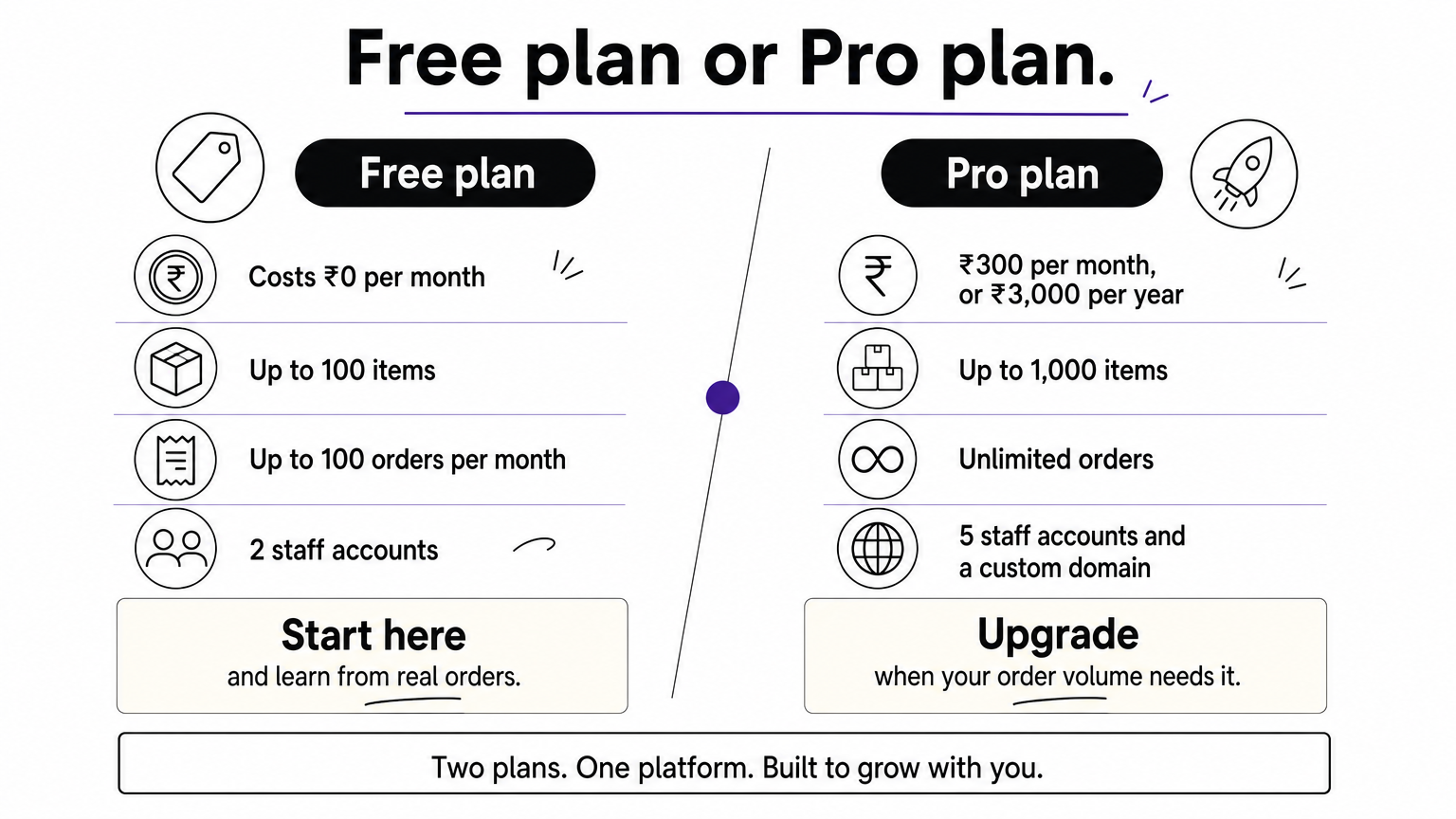
Start on the free plan and upgrade when volume needs it. The paid annual plan costs ₹3,000, against ₹3,600 if you pay ₹300 for twelve months, a saving of ₹600.
| Free | Pro | |
|---|---|---|
| Price | ₹0 per month | ₹300 per month, or ₹3,000 per year |
| Items | 100 | 1,000 |
| Orders | 100 per month | Unlimited |
| Staff accounts | 2 | 5 |
| Custom domain | No | Yes |
Check the legal basics before you launch
Most of these ideas need little paperwork, but a few rules apply early. Rules and thresholds change, so confirm current requirements with the relevant authority or a tax advisor.
- Food: FSSAI registration is needed for homemade food of any kind.
- GST: Registration depends on your turnover, what you sell and your state.
- Udyam: This MSME registration is free and may help with some small business schemes.
- Home rules: Check your housing society rules or rental agreement before customers or students visit.
- Money: Keep a separate bank account, so business income and expenses stay clear.
Pick the idea you can start this month, then improve it with real orders.
Start with the idea you already know
A good small business from home starts with a skill you already have, a budget you can afford and a way to reach the first customers. The ten ideas here cover kitchens, craft tables and laptops. The cost of each is modest, and none needs a shop, a developer or a loan.
Choose one, set a simple price, and make your first sale to someone you know. Take orders and advance payments through a link, so you spend your evenings on the work and not on chasing messages. When orders grow, add upsells, invoices and a custom domain. If you want that setup without technical work, you can create your free Pi-Square link and share it on WhatsApp today.