
Blog
7 Low-Cost Business Ideas for Women at Home in Villages
Seven business ideas for women at home in village life, with start-up costs, earnings and how to find customers. Pick the one that fits your skills.
Published November 1, 2026
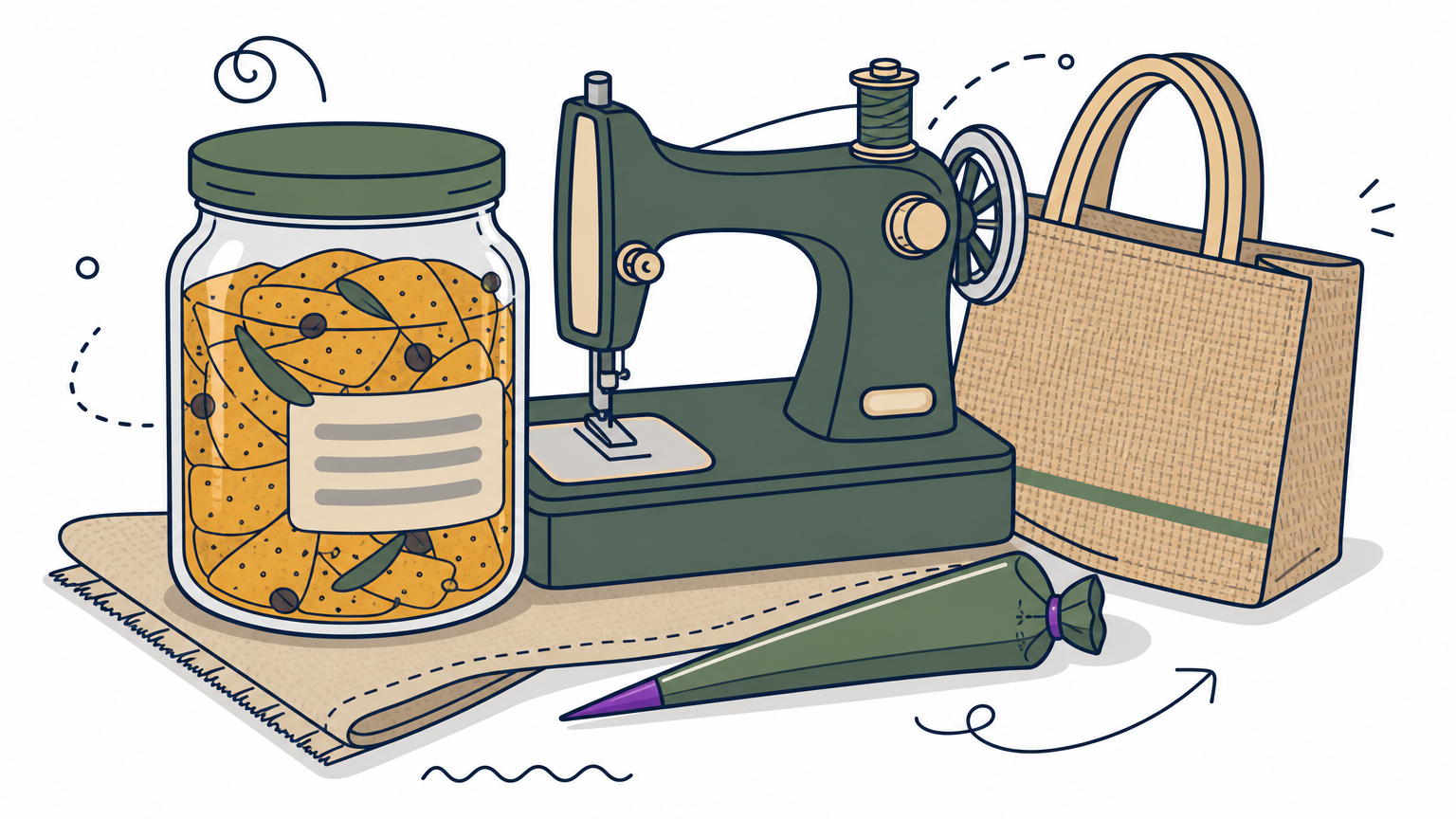
The best business ideas for women at home in village areas share three traits. They use a skill or resource you already have, they cost little to start (most under ₹10,000), and you can sell them with just a phone. This article covers seven that fit. Good cooks do well with homemade food products, and stitchers with tailoring. Women who keep cattle can turn milk into dairy products. Teachers and educated women can run tuition classes. Anyone with a craft or a steady hand can try handicrafts or mehendi. Gardeners can start a small plant nursery.
Most lists of small business ideas for rural areas in India assume you have a shop, a loan or a machine. In a village you usually have less cash, a few free hours between household work, and no market on your doorstep. The harder part is often finding customers beyond your neighbours and keeping track of orders that arrive as scattered WhatsApp messages.
Each idea below covers what it is, who it suits, what you need to start, how you earn, and how to sell. The cost figures are rough planning estimates, and local prices vary, so check them in your area before you spend. Where it helps, I explain how a simple link from Pi-Square lets customers order, book or pay without installing any app.
1. Homemade food products
Packaged pickles, papad, spice powders, millet snacks and badi are the safest first business for a village woman who cooks well. Every household buys them, your recipes are already tested, and you can start from your own kitchen with one or two products.
What you need to start
Plan on ₹3,000 to ₹10,000 for the first few batches, depending on the product and how much you buy in bulk. Your basic kit:
- Raw material bought in bulk from the nearest mandi or wholesaler
- Glass jars or food-grade pouches, plus a sealing tool
- Printed labels with product name, ingredients, weight and date
- An FSSAI registration, which you need before selling packed food. Small producers can apply online through the FSSAI website.
Earning and selling
Here is an illustration. If a 400 g jar of mango pickle costs ₹110 to make and pack and sells for ₹180, you keep ₹70 a jar. At 100 jars a month, that is ₹7,000 a month. Your costs and prices will differ, so test one small batch first.
Sell to neighbours, wedding caterers and nearby hostels first, then take orders on WhatsApp. A catalog link from Pi-Square helps here. Its free plan allows 100 items and 100 orders a month, and customers need no app. WhatsApp Upsells can suggest an extra jar or a combo while someone orders, and Pi-Square charges 10% only on the additional sales it creates.
Start with the one recipe people already ask you for, and sell it well before adding more.
2. Tailoring and embroidery
Stitching blouses, salwar suits, petticoats and school uniforms, plus alterations, is steady work because every household needs it and the nearest tailor is often a bus ride away. It suits women who can already sew, or who can learn in a short course and practise on family clothes.
What you need to start
If you already own a sewing machine, your extra cost can be close to zero. A new basic machine costs a few thousand rupees, and a second-hand one can cost less. Add a small working corner with good light and a stock of basics:
- Measuring tape, chalk and good scissors
- Threads, buttons, hooks and lining cloth in common colours
- A notebook for each customer’s measurements and delivery dates
- Optional: embroidery hoops and designs for borders and yokes
Earning and selling
Charge per job and add extras. If you stitch 20 blouses a month at ₹200 each, that is ₹4,000, before income from alterations, falls and embroidery. Demand peaks before weddings and festivals, so take on extra orders in those weeks and ask for part payment when you accept the cloth.
Post photos of your designs on WhatsApp status and in village groups. With Pi-Square, you can list each design as an item, use variants for size or style, and use custom notes so customers type their requests into the order. Manual payment tracking for cash and UPI is free, so part payments stay recorded.
Take a part payment with every order, so a half-stitched garment is never a loss.
3. Dairy products from your own milk
If your household already keeps a cow or buffalo, turning milk into curd, paneer, buttermilk and ghee usually earns more per litre than selling it raw. This suits women who already manage the animals and the milking, since buying a milch animal is a far bigger investment than the rest of this idea.
What you need to start
Excluding the animal, expect ₹2,000 to ₹8,000 for equipment and packaging. Check these basics:
- Steel vessels, a strainer and muslin cloth for paneer and curd
- A weighing scale and clean containers or pouches
- A cool, covered place for storage, and clean water
- An FSSAI registration, because the same rules apply to dairy products as to other packed food
Earning and selling
Work out your cost per kilo before you set a price. Paneer takes roughly 5 to 7 litres of milk per kilo, depending on the milk, so a price that ignores this can leave you with nothing. Fresh curd and paneer sell best to nearby households, tea stalls and sweet shops. Ghee keeps longer, so you can sell it to town customers and at festivals.
Consistency builds repeat customers more than any discount. Pi-Square lets you list each product with real-time stock and an availability toggle, so you can mark paneer sold out when the batch ends. Customers see only what you actually have, and you avoid saying no on a chat after they have ordered.
Value-added dairy beats raw milk only when your hygiene and taste stay the same every single day.
4. Handicrafts and handloom
Baskets, jute bags, bamboo items, terracotta, handloom stoles and embroidered cushion covers use local material and skills that many village families already hold. This idea suits women with a traditional craft skill who want to sell beyond the village, where buyers pay more for handmade work.
What you need to start
Budget ₹2,000 to ₹10,000 for raw material and tools, depending on the craft. You will need:
- Local material such as bamboo, cane, jute, palm leaf, clay or cotton yarn
- Basic tools for your craft, plus finishing supplies
- Sturdy packaging for transport, such as boxes and bubble wrap
- Clear daylight photos against a plain background
For training, designs and exhibitions, ask your Block Development Office or self-help group (SHG) federation what is running in your district.
Earning and selling
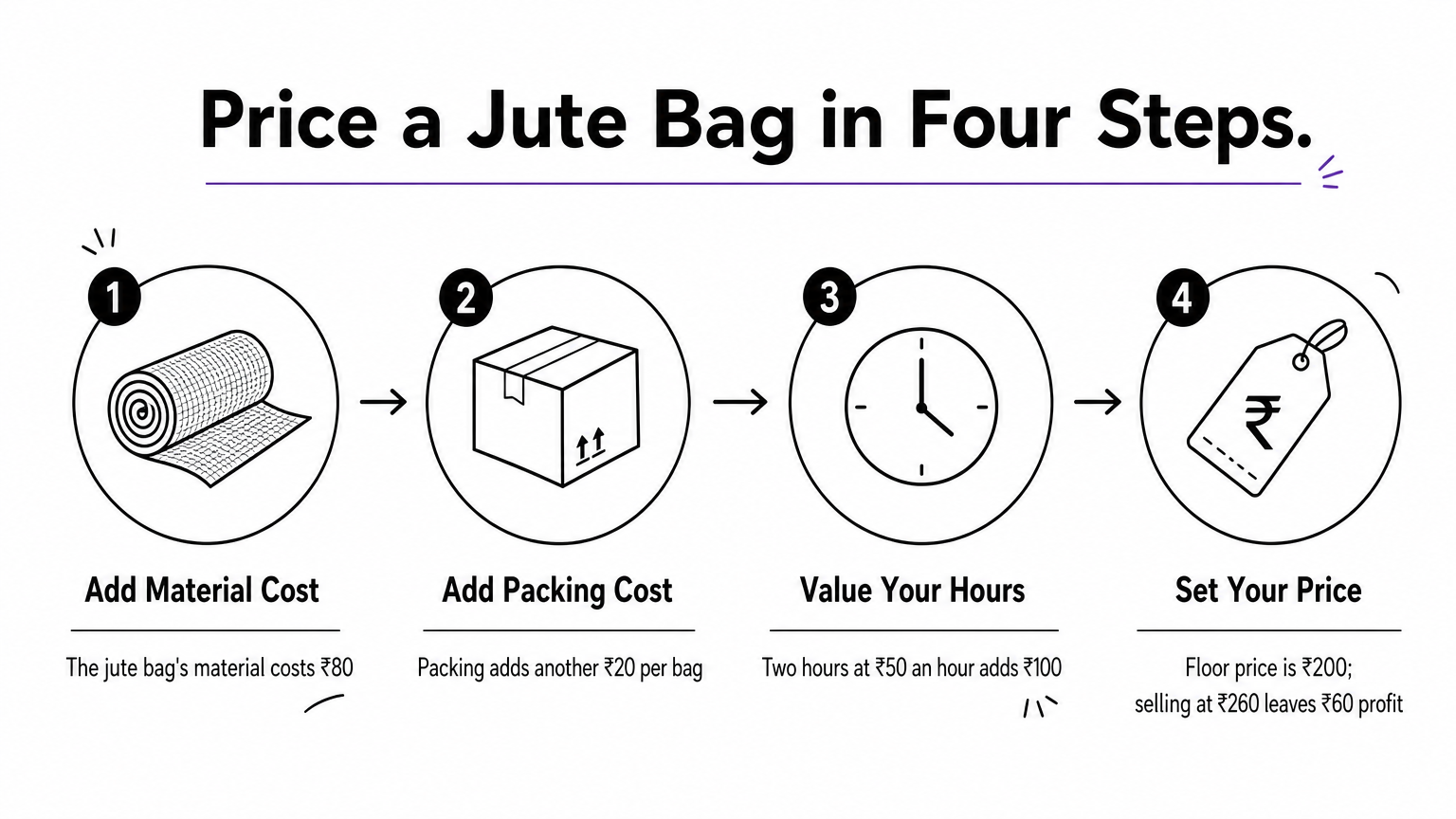
Price by adding material, packing and your own hours. Say a jute bag has ₹80 of material and ₹20 of packing, and takes two hours, which you value at ₹50 an hour. The floor price is ₹200. Selling it at ₹260 leaves ₹60 profit. Many craft sellers underprice because they do not count their own time.
Pi-Square supports image and video catalogs with rich descriptions, which suit handmade items well. You can also connect supported shipping providers to create shipments and track delivery. Shipping charges are billed separately by the provider, so include them in your price or state them clearly on your page.
Price your craft by counting your own hours, or you will work for free.
5. Tuition and skill classes at home
Teaching school subjects, spoken English, basic computer skills or stitching to children and women nearby is the cheapest idea on this list, because you sell knowledge, not stock. It suits women with a school or college education and patience for small groups. Many parents prefer a teacher in the same village.
What you need to start
You need about ₹1,000 to ₹5,000 for the basics:
- Mats or benches, a board, chalk or markers
- Notebooks, charts and practice sheets
- A fixed batch timing, such as two evening hours
- A register for attendance and monthly fees
Earning and selling
Fees are set by what parents in your village can pay. With 15 students at ₹300 a month, you earn ₹4,500. A second batch of 15 doubles that to ₹9,000 without new equipment. Older girls and women often pay for spoken English or computer basics, so you can add those once the first batch is stable.
Share a registration link in school WhatsApp groups and ask parents to forward it. Pi-Square supports classes with registrations and advance payments, so you can collect the first month’s fee when a student joins. Because manual payment tracking is free, you can also log cash and UPI fees in one place and chase pending fees without a paper register.
You are selling results, so send each parent a short progress note every month.
6. Plant nursery and kitchen-garden produce
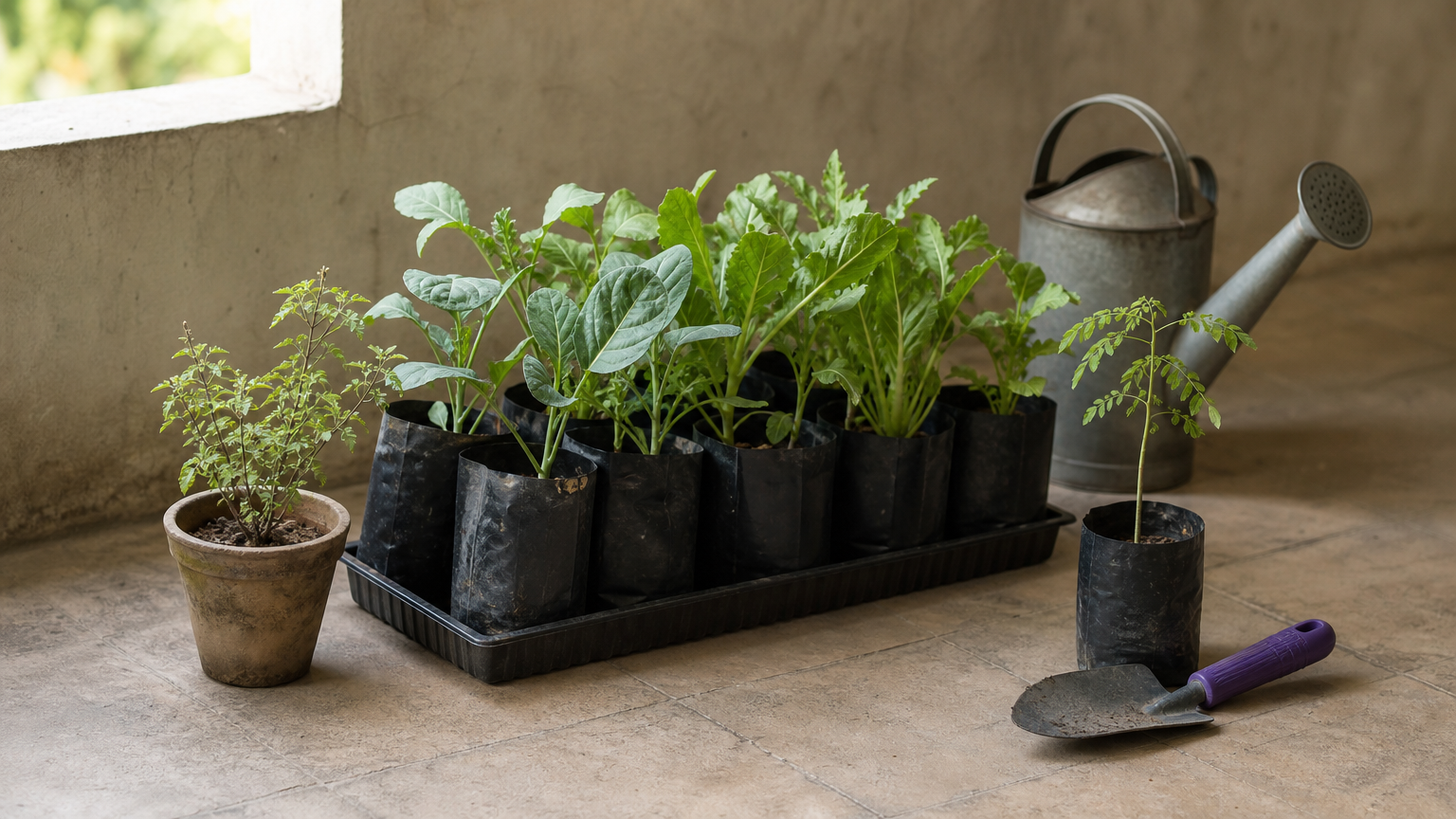
Raising vegetable seedlings, flower plants, tulsi, curry leaf, moringa and fruit saplings in polybags, and selling surplus vegetables from a kitchen garden, suits women with a patch of land and a water source near the house. Demand is seasonal, so timing decides your income.
What you need to start
Plan on ₹2,000 to ₹8,000:
- Seeds and saplings from the agriculture department, certified seed shops or a Krishi Vigyan Kendra (KVK)
- Polybags and a soil mix with compost
- A shaded corner and easy access to water
- A watering can or hand sprayer
Your district KVK runs training on nursery and kitchen-garden practices, so ask about it before you buy inputs.
Earning and selling
Vegetable seedlings sell in the weeks before the sowing season, so start the batch early enough to be ready then. Fruit and flowering plants fetch much more per plant than vegetable seedlings, so a mix of both keeps income going between seasons. Begin with about 200 polybags of one popular plant, sell the full batch, and only then expand.
Neighbouring farmers, schools, temples and households with courtyards are your first buyers. A Pi-Square link works as a plant list, and the availability toggle lets you hide plants that have sold out. Post the link in village and farmer WhatsApp groups when a new batch is ready.
Sell the whole first batch before you grow the second, because your first season teaches you what buyers want.
7. Beauty, mehendi and bridal services
Mehendi, threading, facials, hair care and bridal dressing earn well around weddings and festivals, and many women prefer a woman who works from home or visits theirs. It suits women with a steady hand and a good eye, or those willing to take a short course in beauty or mehendi.
What you need to start
Set aside ₹3,000 to ₹10,000 for a starter kit and a short course if you need one:
- Mehendi cones and a design book or phone folder
- A basic beauty kit with sanitised tools and disposable items
- A clean chair, mirror and good lighting
- Patch tests for new clients to avoid reactions
Earning and selling
Income is seasonal and bookings arrive days or weeks ahead. If you charge ₹300 for a festival mehendi session and book 10 of them, you earn ₹3,000 in a few days. Bridal packages bring more per client, but they take time and need a reputation, so build that with good work at family events first.
Take an advance for every booking, since a no-show on a wedding day costs you the whole slot. Pi-Square handles bookings and advance payments through one link, and customers pick a service and date without installing an app. Use your best photos as the service catalog, because in this work the portfolio sells the booking.
An advance payment turns a verbal promise into a booked date.
Pick one idea and start this month
The right choice depends on what you already do well. If you cook, start with food products. If you sew, take stitching orders. If you keep animals, sell dairy products. Whichever you pick, start with one product or service, sell to your first ten customers, and fix what goes wrong before you grow. That approach works for any small business idea in rural India and costs little if the idea does not take off.
Selling is the step that decides whether the idea turns into income. If you are ready to take orders, bookings or payments from one link instead of scattered chats, you can create your free selling link on Pi-Square and share it with your first customers today.