Blog
10 Low-Cost Small Business Ideas in India for Students
Find 10 small business ideas in India for students, with startup costs, worked earnings examples, and steps to start alongside your classes.
Published November 22, 2026
The best small business ideas in India for students cost less than a few thousand rupees to start, run from a phone or laptop, and fit into 5 to 10 hours a week. Online tutoring and freelance writing suit you if you know a subject well. Home baking and handmade gifts suit you if you like making things. Social media, design, and video editing suit you if you already spend hours on creative apps.
Most lists hand you 50 ideas and no numbers. You still do not know what an idea costs, how long the first payment takes, or whether it clashes with exams. This article gives you ten ideas, each with a startup cost, a worked earnings example, and three steps to begin.
We build Pi-Square, which helps small sellers in India put products, bookings, and payments behind one shareable link. Many first-time sellers handle orders manually in WhatsApp chats and struggle with disorganized orders and payment tracking, so we flag where that matters. You also get a comparison table and a checklist of rules to check first.
1. Online tutoring
Online tutoring is the most dependable first business for a student, because you already own the product: what you know. You teach school students or exam aspirants over Google Meet, Zoom, or a phone call, one to one or in small groups. Subjects you scored well in at Class 10 or 12 are enough to start with Classes 6 to 10, and batches of four to six students raise your income per hour without extra preparation.
Sell the result a parent wants, a better score, and not the hours you spend teaching.
Cost and earnings
You need a stable internet connection, headphones, and a free whiteboard app. The real cost is your time, so price per session until you know how many hours you can protect, and move to monthly fees once you have regular students.
- Startup cost: ₹0 to ₹2,000.
- Worked example: 8 sessions a week at ₹300 each is ₹2,400 a week, or ₹9,600 over four weeks.
- First income: 1 to 2 weeks.
Who it suits and how to start
Tutoring suits students who explain things patiently and can keep fixed weekly slots. It suits you less if your timetable changes every week, and you should pause during your own exam weeks and tell parents in advance.
- Pick one subject and one range of classes.
- Offer two free trial classes to neighbors’ and relatives’ children.
- Collect each month’s fee in advance, before the first class.
2. Freelance content writing
Freelance content writing means writing blog posts, website copy, product descriptions, and social captions for businesses that have no time to do it. It works well if you write clean English or a regional language that businesses want content in. Clients find you on Upwork and Fiverr, on LinkedIn, or through direct messages to local businesses.
One repeat client is worth more than ten one-off gigs, so write for the second order.
Cost and earnings
Writing needs no investment beyond a laptop and a free grammar checker. Beginners earn little per piece, so repeat clients and steady monthly volume matter more than a high rate.
- Startup cost: ₹0.
- Worked example: a 1,000-word article at ₹1,500, four a month, gives ₹6,000.
- First income: 2 to 6 weeks.
Who it suits and how to start
This suits students who read a lot and can finish a draft in one evening. Choose a niche you understand, such as education, food, or tech, because specialists can charge more than general writers.
- Write three samples on topics you know and publish them on LinkedIn or a free blog.
- Pitch ten local businesses with one specific post idea each.
- Quote a price per article, not per hour, and take half in advance.
3. Home baking
Home baking is the best product-based idea on this list, because food sells again and again and your first customers come from your own circle. You bake cakes, cupcakes, cookies, or brownies to order and deliver locally. Selling in pre-ordered batches keeps waste low, and a menu of five items keeps preparation manageable.

Pre-sell every batch, so you bake only what is already paid for.
Cost and earnings
Costs depend on whether you already own an oven. Price each item from ingredients, packaging, and your time, and charge delivery separately. Packaging and photos decide whether strangers trust you, so spend there before you spend on extra equipment.
- Startup cost: ₹3,000 to ₹10,000 if you already have an oven.
- Worked example: a box of six cupcakes sells for ₹450 and costs ₹250 in ingredients and packaging, leaving ₹200. Ten boxes a weekend is ₹2,000, or ₹8,000 over four weekends.
- First income: 1 to 2 weeks.
Who it suits and how to start
Baking suits students who enjoy cooking and can bake on weekends. Hostel rules often ban cooking, so check them first. Food businesses in India also need FSSAI registration, and the category depends on your turnover, so confirm what applies on the FSSAI website before you sell widely.
- Test five recipes on friends and fix a price per item.
- Photograph each item in daylight against a plain background.
- Open a weekly pre-order window and close it two days before delivery.
4. Social media management for local shops
Social media management means running the Instagram, Facebook, or WhatsApp Business presence of a local shop, café, salon, or coaching centre. You plan posts, design them, write captions, and send a short monthly report. Owners know they should post but lack time, so you are paid for consistency and for saving their hours.
A fixed scope per month protects your marks as much as your margin.
Cost and earnings
Free tiers of design and scheduling tools cover most of what you need. Tie each fee to a fixed output, such as 12 posts and a monthly report, because clients keep adding work when the scope is vague and your hours then balloon.
- Startup cost: ₹0 to ₹1,000.
- Worked example: 3 clients at ₹4,000 a month gives ₹12,000.
- First income: 2 to 4 weeks.
Who it suits and how to start
This suits students who are fluent in Instagram and comfortable messaging strangers. Start with one client and add another only after a month of on-time delivery. Never promise follower counts, because results you cannot control will cost you the client.
- Pick one type of business, such as cafés or tuition centres.
- Review three local pages and send each owner three free suggestions.
- Offer a one-month trial at a reduced fee with 12 posts.
5. Graphic and presentation design
Graphic and presentation design earns money from logos, menus, posters, Instagram templates, and pitch decks for people who cannot design. It fits you if you already use Canva or Figma. Local shops need festival offers and menu updates all year, which gives you repeat work rather than one-off jobs.
Sell a small package with revisions included, and the work keeps coming back.
Cost and earnings
Free plans of Canva and Figma are enough to begin. Sell packages, not single files, for example a logo plus three social templates, and decide in advance how many revision rounds the price includes.
- Startup cost: ₹0 to ₹1,000.
- Worked example: 5 logos or menus a month at ₹1,000 each gives ₹5,000.
- First income: 2 to 4 weeks.
Who it suits and how to start
This suits students with an eye for layout who can take feedback calmly. Ask for a written brief before you start, and cap revisions at two rounds so one client cannot eat your week.
- Make six sample designs for imaginary shops.
- Post them on Instagram or Behance as a portfolio.
- Message coaching centres and home businesses with a redesigned version of their own poster.
6. Video editing for creators
Video editing for creators means cutting Reels, YouTube videos, and promo clips for people who film but cannot edit. Demand is steady because small creators and shops post often. You can edit on a phone or laptop with free tools such as CapCut or DaVinci Resolve, and you deliver within an agreed turnaround.
Creators pay for fast, reliable edits, so a promised turnaround is your best credential.
Cost and earnings
Free editors cover the basics, so your main asset is speed. Quote a turnaround time you can keep, and build reusable templates for captions and transitions to cut your editing time per video.
- Startup cost: ₹0 to ₹1,000.
- Worked example: 10 short videos a month at ₹500 each gives ₹5,000.
- First income: 2 to 4 weeks.
Who it suits and how to start
This suits patient students who notice small details and can hit deadlines. Raw footage arrives on the creator’s schedule, so keep a buffer day before your own assignments and never accept more videos than your week allows.
- Edit three sample clips using free stock footage.
- Message 20 small creators and local businesses with a sample edited from their own content.
- Start at ₹500 per video and raise your price after five clients.
7. Handmade and customized gifts
Handmade and customized gifts, such as hampers, personalized notebooks, resin keychains, and festival boxes, sell best around Raksha Bandhan, Diwali, and Valentine’s Day. You buy materials in bulk, make small batches, and take pre-orders so nothing sits unsold. Personal touches let you charge more than a shop-bought gift.
Customization lets you charge more than a shop-bought gift, as long as you take orders early.
Cost and earnings
Wholesale markets lower material costs, but make one sample batch before you buy in bulk. Keep a cost sheet per product and add a small buffer for breakage and rework.
- Startup cost: ₹2,000 to ₹10,000.
- Worked example: a hamper costs ₹300 to make and sells for ₹600, so 15 hampers a month leave ₹4,500.
- First income: 2 to 3 weeks.
Who it suits and how to start
This suits creative, patient students who can plan around lead times. Income comes in bursts around festivals, so it works best as a seasonal add-on to another idea on this list.
- Pick three products and make one sample of each.
- Photograph them and share with 20 contacts for feedback and first orders.
- Open pre-orders two weeks before a festival and set a firm cut-off date.
8. YouTube channel or blog
Starting a YouTube channel or blog is the slowest idea here to pay, but it builds an audience you own. You publish videos or articles on one topic, such as budget study tips or campus life. Income comes later, from sponsorships, affiliate links, or ads once you meet the platform’s rules, and selling your own service to that audience often pays sooner.
Treat a channel as a shop window for your services, not as a lottery ticket.
Cost and earnings
A phone and free editing tools are enough. Posting once a week for a year gives you 52 pieces of proof that you can show a sponsor or client, and consistency matters more than polish.
- Startup cost: ₹0.
- Worked example: no promised figure, because ad and sponsorship income depends on views and platform rules. Plan for months with no income.
- First income: often 6 to 12 months or more.
Who it suits and how to start
This suits patient students who enjoy making content for its own sake. It is a poor fit if you need money within a month. Pair it with tutoring, design, or writing so the channel sends you paying clients while it grows.
- Pick a topic you can talk about for at least 20 videos or posts.
- Publish on a fixed weekday for 12 weeks before judging results.
- Add a link to your paid service in every description or post.
9. Photography for events and products
Photography for events and products pays when you shoot for people who need good images but cannot afford a studio. Local sellers need clean photos for WhatsApp catalogs and Instagram pages, and families and colleges need event coverage. A modern phone and window light are enough to start with product shots.

Start with product shots, because they are scheduled, indoors, and easy to repeat.
Cost and earnings
A white sheet, a small tripod, and a free editing app cover product work. Charge per edited photo with a minimum order, and add events only after you have the gear and stamina for long shoots.
- Startup cost: ₹500 to ₹2,000.
- Worked example: 25 edited product photos at ₹100 each is ₹2,500 per catalog, so two catalogs a month give ₹5,000.
- First income: 2 to 4 weeks.
Who it suits and how to start
This suits students with an eye for light and composition who like detail work. Product shoots can be booked around your classes, while events usually fall on weekends and evenings.
- Shoot ten products at home using window light and a plain background.
- Offer a free five-item shoot to two local sellers, and ask permission to share the results.
- Publish a price list with a per-photo rate and a minimum of ten photos.
10. Virtual assistant services
Virtual assistant work means handling email, scheduling, spreadsheets, research, and data cleanup for busy founders and small teams. It is the lowest-risk freelance option because you need no portfolio, only reliability and clear communication. Most early clients are people you already know or can reach through LinkedIn.
If someone asks you to pay to get work, it is not work.
Cost and earnings
You need a laptop, a reliable connection, and basic spreadsheet skills. Be careful with offers online: any “data entry” job that asks for a registration fee or deposit is a scam. Build your first clients through your own network instead.
- Startup cost: ₹0.
- Worked example: 10 hours a week at ₹250 an hour for four weeks gives ₹10,000.
- First income: 2 to 4 weeks.
Who it suits and how to start
This suits organized students who reply quickly and finish small tasks without reminders. It is a good starting point if you want general office skills and still need to learn what you enjoy, since you will see how a real business runs.
- List three tasks you do well, such as Excel, email handling, or scheduling.
- Offer a five-hour trial to a founder, professor, or shop owner you know.
- Track your hours in a shared sheet and send a weekly summary.
How to choose an idea and start without risking exams
Choose the idea with the lowest startup cost that matches a skill you already have, and cap your weekly hours before you take a single client. The table below compares all ten, followed by the rules to check and a simple way to take orders.
Compare the ten ideas side by side
These are ballpark figures for a typical beginner setup. Your numbers will vary with your city, your skill level, and the prices you set.
| Idea | Rough startup cost | Hours per week | First income |
|---|---|---|---|
| Online tutoring | ₹0 to ₹2,000 | 6 to 10 | 1 to 2 weeks |
| Freelance content writing | ₹0 | 5 to 10 | 2 to 6 weeks |
| Home baking | ₹3,000 to ₹10,000 | 6 to 12 | 1 to 2 weeks |
| Social media management | ₹0 to ₹1,000 | 8 to 12 | 2 to 4 weeks |
| Graphic and presentation design | ₹0 to ₹1,000 | 5 to 10 | 2 to 4 weeks |
| Video editing | ₹0 to ₹1,000 | 6 to 10 | 2 to 4 weeks |
| Handmade and customized gifts | ₹2,000 to ₹10,000 | 6 to 12 | 2 to 3 weeks |
| YouTube channel or blog | ₹0 | 5 to 8 | 6 to 12 months or more |
| Photography | ₹500 to ₹2,000 | 4 to 8 | 2 to 4 weeks |
| Virtual assistant | ₹0 | 8 to 10 | 2 to 4 weeks |
Rules to check before you start
Most problems for student sellers come from rules they never read, not from the idea. Run through this list once, before your first sale.
- Read your college and hostel rules on running a business or cooking in rooms.
- If you sell food, confirm FSSAI registration requirements for your turnover.
- If you are under 18, involve a parent or guardian for bank accounts and payments.
- Keep a record of income, because tax and GST obligations depend on your earnings, what you sell, and your state. Ask a tax advisor when you are unsure.
- Set a weekly hour cap, and pause new orders in exam weeks.
- Never pay a fee to get work, and read each platform’s terms before you deliver.
Take orders and payments without building a website
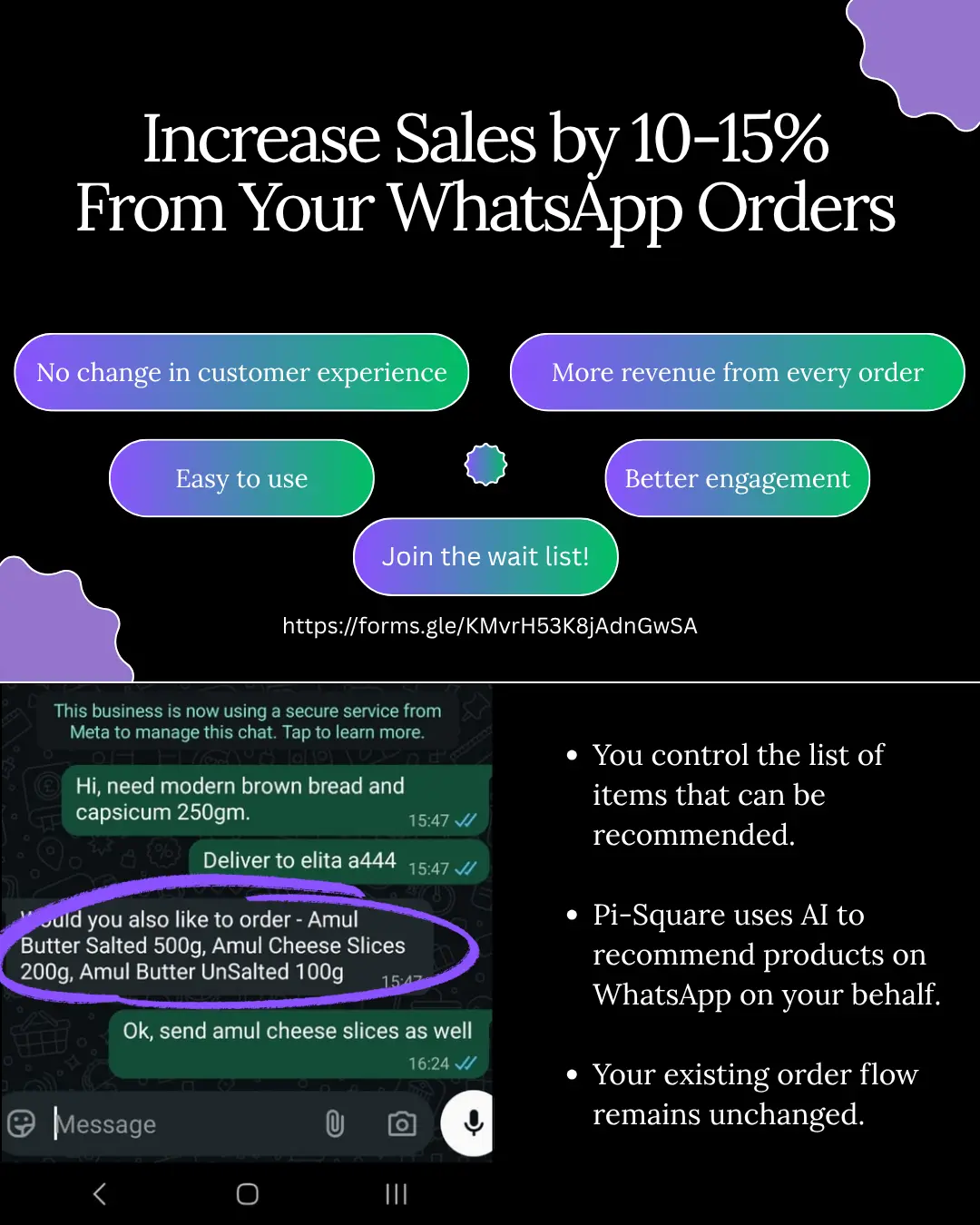
If your idea sells products or class slots, orders buried in WhatsApp chats become a problem by your tenth customer. With Pi-Square you create a shareable commerce link in minutes from the mobile or web app, and your customers need no app to order, book, or pay. It suits baking, gifts, photo packages, and tutoring batches that take advance payments.
Start with a free link and a few repeat customers, and upgrade only when orders outgrow the limits.
| Plan | Price | Orders | Items | Staff accounts | Custom domain |
|---|---|---|---|---|---|
| Free | ₹0 per month | 30 per month | 10 | 1 | No |
| Pro | ₹300 per month (₹3,000 per year) | 300 per month | 100 | 3 | Yes |
| Growth | ₹1,000 per month (₹10,000 per year) | Unlimited | 10,000 | 10 | Yes |
Tracking payments manually, across cash, UPI, and other modes, is free. If you connect a payment gateway, fees are typically around 2% of order value and go to the gateway provider, not to Pi-Square. If you sell cakes or hampers, WhatsApp upsells can suggest add-ons at checkout, with a 10% charge only on the additional sales they bring in.
Start with one idea this month
The strongest small business ideas for students in India are the ones that match a skill you already have, cost little, and fit around your timetable. Tutoring and writing need almost no money. Baking and gifts need a little capital and early orders. Design, video, photography, and social media pay once you show one clear sample.
Pick one idea, not three. Set your weekly hour cap, check the rules in the list above, and get your first customer within two weeks, even if the price is low.
If your idea sells products, class slots, or bookings, set up a clean way to take orders before the first rush so every order and advance is tracked from day one. You can create your free Pi-Square link in minutes and share it wherever your customers already are.