
Blog
Business Ideas in Small Towns in India: 5 Low-Cost Picks
Business ideas in small towns India: kirana, tiffin, mobile repair, coaching and tailoring. Get startup costs, income examples and WhatsApp order tips.
Published November 10, 2026
The best business ideas in small towns in India sell something people need every week, start with a small stock or a skill you already have, and do not depend on a large crowd. Five fit that test. A daily-needs store with home delivery suits a shopkeeper who is comfortable holding stock. Home food and tiffin suits anyone with a kitchen and a reliable routine. A mobile repair shop suits a technical person. Coaching classes suit graduates and teachers. Tailoring suits anyone with stitching skill and an eye for fit.
The problem in a small town is rarely a lack of ideas. Your customer base is limited, rents and margins are modest, and a wrong choice of business ties up savings you cannot easily replace. Most lists of ideas skip the numbers, so you cannot tell which one fits your budget. This article gives each idea the same checks: what it costs to start, who it suits, and how to find your first customers.
The cost figures are rough planning ranges, and they vary by town, rent and supplier, so confirm them locally before you commit. Where an idea involves orders, bookings or payments, we also point out how a simple WhatsApp-friendly store link from Pi-Square can keep it organized. Customers only need a link, and you can start free.
1. Grocery and daily-needs store with delivery
A grocery and daily-needs store is the safest small town business idea in India because demand repeats daily and does not depend on festivals or tourists. Adding home delivery to nearby streets gives you an edge over a bigger shop that customers must walk to.
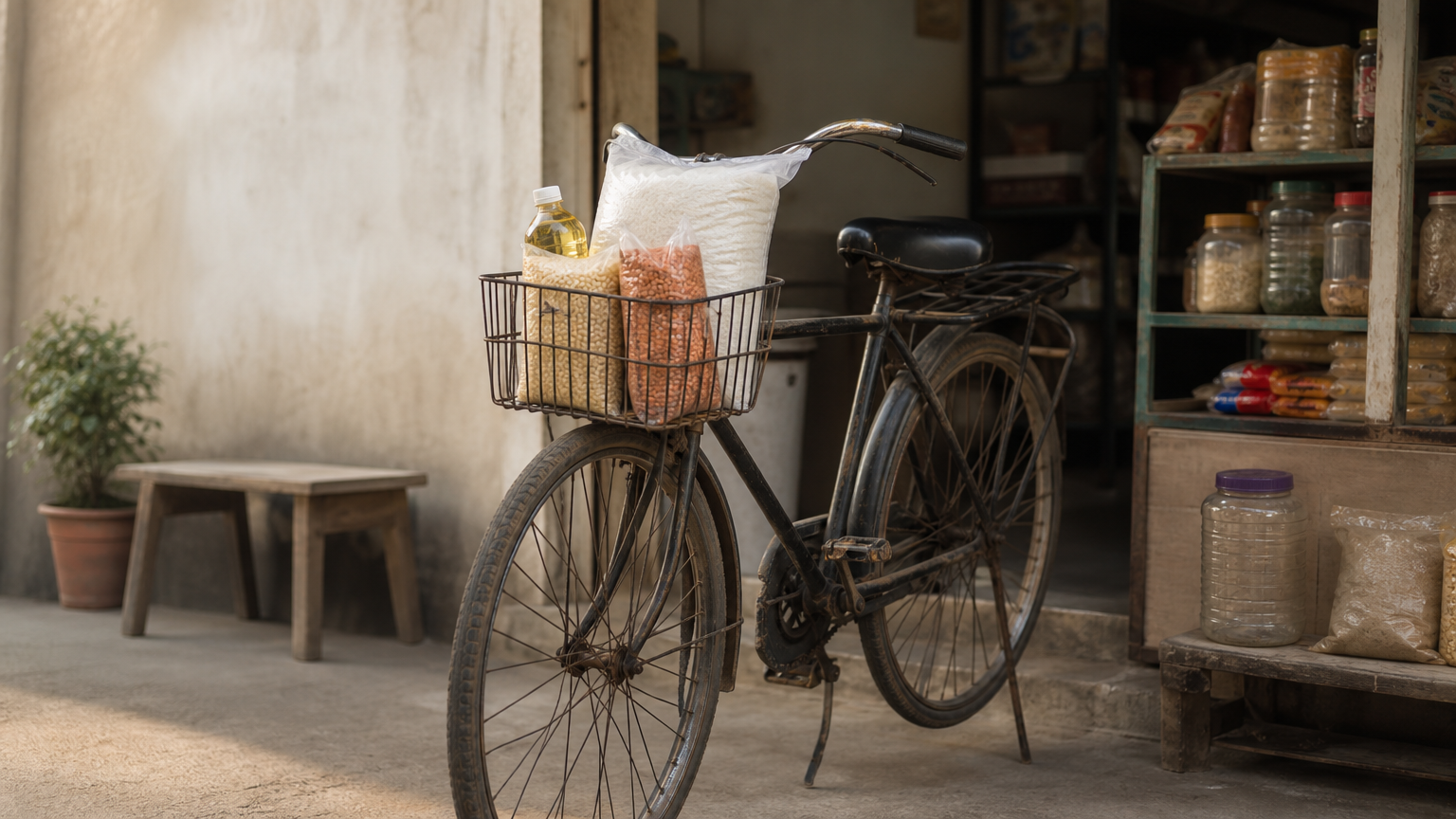
In a small town, daily repeat demand beats a high margin on a rare sale.
Startup cost and setup
Expect most of your money to go into opening stock. These are rough planning figures:
- Opening stock: about ₹1 lakh to ₹3 lakh
- Shelving, weighing scale and billing setup: about ₹15,000 to ₹40,000
- Shop rent: depends on your town, so use a front room at home if you can
Check your state’s shop registration rules, and get FSSAI registration if you sell packaged food. A kirana stocks far more than 100 items, so on Pi-Square you would likely need the Pro plan at ₹300 a month, which allows 1,000 items. The Free plan stops at 100.
Who it suits and how to sell
This suits someone who can manage stock and stay near the shop all day. Collect the WhatsApp numbers of your regular customers and let them send their weekly list. Then share a catalog link so they can order without typing every item. Pi-Square has a local grocery demo store you can look at before you set up your own.
2. Home food, tiffin and bakery orders
Home food is the cheapest entry on this list because your kitchen is already your shop. Tiffin service for office workers, students and bachelors brings steady monthly income. Cakes and snacks for birthdays and festivals add higher-value orders on top.
A home kitchen with 25 regular tiffin customers is a business before it needs a shop.
Startup cost and setup
Costs stay low if you cook at home:
- Vessels, containers and packaging: about ₹10,000 to ₹30,000
- FSSAI registration: required for food businesses, and the fee is small
- Gas and ingredients: paid from the first week’s orders
Here is an illustrative example. If you serve 30 tiffins a day at ₹80 for 26 days, you earn ₹62,400 a month. If ingredients take about 55%, roughly ₹28,000 remains before gas and any helper.
Who it suits and how to sell
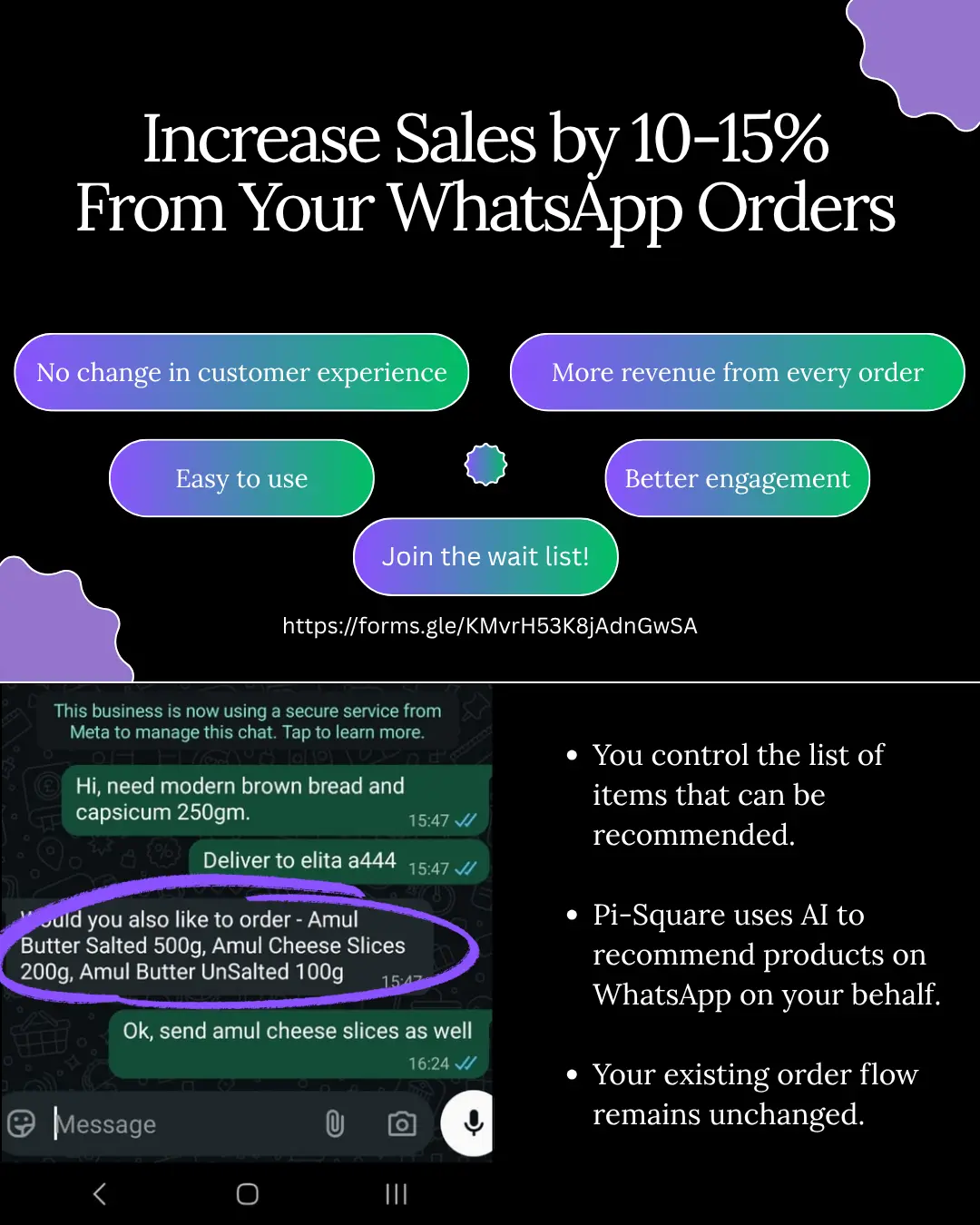
This suits people who cook well and can keep delivery times. Start by feeding neighbors and nearby offices and asking for referrals. As orders grow, keep them on WhatsApp but add structure. Pi-Square’s WhatsApp upsells can suggest a dessert or an extra roti pack at ordering time. The 10% charge applies only to the additional sales it creates.
3. Mobile repair and accessories shop
A mobile repair and accessories shop works in a small town because almost every household owns a smartphone, and the nearest brand service centre may be far away. Screen replacement, battery swaps and software fixes bring people in. Covers, chargers and recharges keep them coming back.
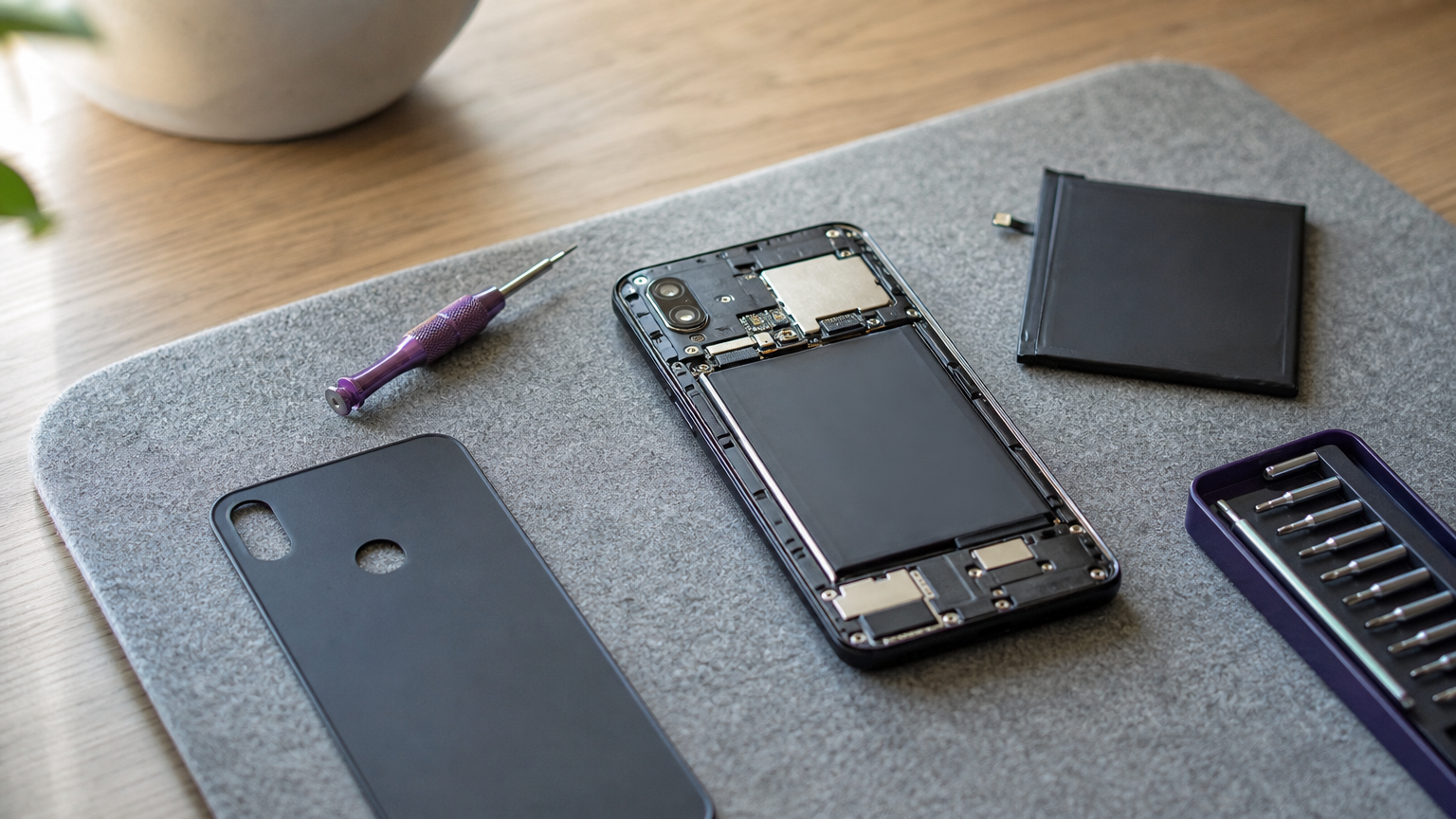
The repair brings the customer in, and the accessories make the margin.
Startup cost and setup
You need skill first and stock second:
- Repair course: usually a few weeks to a few months
- Tools and testing equipment: about ₹20,000 to ₹50,000
- Accessories stock: about ₹20,000 to ₹50,000
Source spare parts from a reliable wholesaler. Poor-quality parts lead to repeat complaints and quickly damage your name.
Who it suits and how to sell
This suits technically minded people who enjoy fixing things. Choose a spot near a market, school or bus stand, and offer same-day repairs on common faults. Give a written warranty on parts. You can also list your repair services on a Pi-Square service link so customers can enquire first, and nobody is forced to pay up front.
4. Coaching and skill classes
Coaching classes turn knowledge into income with almost no stock. Parents in small towns pay for school tuition, spoken English and computer basics because good teaching is scarce locally. Batches also make income predictable from month to month.
Teaching is the one business where your biggest asset is already in your head.
Startup cost and setup
Setup is mostly furniture and time:
- Room, benches, whiteboard and fans: about ₹20,000 to ₹60,000
- Study material and printouts: small monthly cost
- Fees: set per batch and collected monthly
Consider an illustrative case. With 20 students at ₹500 a month, you earn ₹10,000 monthly. A second batch of 20 doubles that to ₹20,000 without a new room.
Who it suits and how to sell
This suits graduates, retired teachers and anyone patient with children. Offer a free trial class and let results spread by word of mouth. Pi-Square handles registrations and advance payments through one booking link, which saves you from chasing parents for fees on WhatsApp.
5. Tailoring and custom boutique
Tailoring is a skill business with steady, repeat demand. Blouse stitching, alterations, school uniforms and festival and wedding outfits all need a local hand. A small town rarely has enough good tailors, so quality work fills your diary quickly.
A tailor who delivers on the promised date never runs short of customers.
Startup cost and setup
You can begin with very little:
- Basic sewing machine: roughly ₹8,000 to ₹15,000
- Measuring tools, scissors and thread: a few thousand rupees
- Optional fabric stock for ready-made items: add later from profits
Learn from a training centre or an experienced tailor if you need to build skill first. Neat finishing matters more than a large shop.
Who it suits and how to sell
This suits people with stitching skill, including those who want to work from home. Photograph your best work and share it in WhatsApp groups. A Pi-Square catalog supports variants and custom notes, so customers can add measurements or style requests with the order. Expect the busiest weeks around festivals and the wedding season.
Start with the idea you can run well
Every idea here earns because people need it repeatedly: groceries, meals, phone repairs, teaching and stitched clothes. Choose by your own skill and savings, and start with a small version before you add stock or space. A mismatch between the idea and the owner hurts a business more than a low budget does.
Whichever you choose, move your orders and bookings off scattered chats early. You can create your free online store with Pi-Square, share one link with customers, and upgrade only when your orders grow.