
Blog
Women's Home Business Ideas: 6 Low-Cost Picks for India
Compare six women's home business ideas for India: tiffin, tailoring, tutoring, freelancing, crafts and reselling, with sample costs and tips.
Published October 25, 2026
The best women’s home business ideas use a skill you already have, need little stock or equipment, and bring the same customers back every month. For women across India, whether you are a homemaker, a student, a working professional looking for side income, or a retiree, that points to six options. Tiffin and home catering suit you if you cook well. Tailoring suits you if you stitch. Online tutoring suits you if you teach. Freelancing suits you if you write or design. Handmade gifts suit you if you craft, and reselling suits you if you are good with people and phones.
Most lists throw 25 ideas at you and leave the choosing to you. The real question is which idea fits your hours, your savings and your skills, whether you have a full day free or two hours after a job. A second question comes right after it: what happens when orders start arriving as WhatsApp messages, UPI screenshots and notes in a notebook? Many home businesses stall at that point, not because the idea was weak but because the admin took over.
This article gives you six ideas, each broken down the same way: how it works, what it costs and earns, and who it suits. The sums are illustrative examples, so replace the prices with what your city and customers will actually pay. We also point out where a simple order link, such as the ones Pi-Square sellers use, saves you time.
1. Tiffin and home catering
Tiffin and home catering means cooking fixed meals at home and delivering them to regular customers. It is one of the most dependable home business ideas for women because food is a daily need and satisfied customers renew.
How it works
Start with one simple menu, such as a vegetarian thali with a weekly rotation, and sell it by the week or month. Your first 10 to 15 customers usually come from your apartment complex, friends’ offices and neighbourhood groups. You can take the same model to a home bakery, where customers pre-order cakes or snack boxes instead of subscribing to meals.
Customers will ask for the menu and prices again and again. A single shareable link with the menu, plan options and payment details answers that once. With Pi-Square, customers need no app, and tracking cash or UPI payments by hand is free.
Ten tiffin subscribers who renew every month are worth more than fifty one-time orders.
What it costs and earns
You mostly use your existing kitchen. Budget for steel or disposable containers, packaging, extra gas and ingredients bought in bulk. Here is an illustrative month:
- 20 subscribers at ₹120 per meal for 26 days: ₹62,400 in sales
- Ingredients and gas at about half of sales: ₹31,200
- Left before packaging, delivery help and your time: roughly ₹31,200
Who it suits and what to watch
This suits anyone who cooks consistently and can handle early mornings, whether or not you are at home full time. Food businesses in India need FSSAI registration. As a general rule, small operators with annual turnover up to ₹12 lakh need basic registration, and larger ones need a licence. Check the category for your activity on the FSSAI website.
- Fix a delivery window and stick to it. Late tiffins lose customers faster than average food.
- Collect payment in advance for the week or month.
- Cap your customer count at what you can cook well.
2. Tailoring and alterations
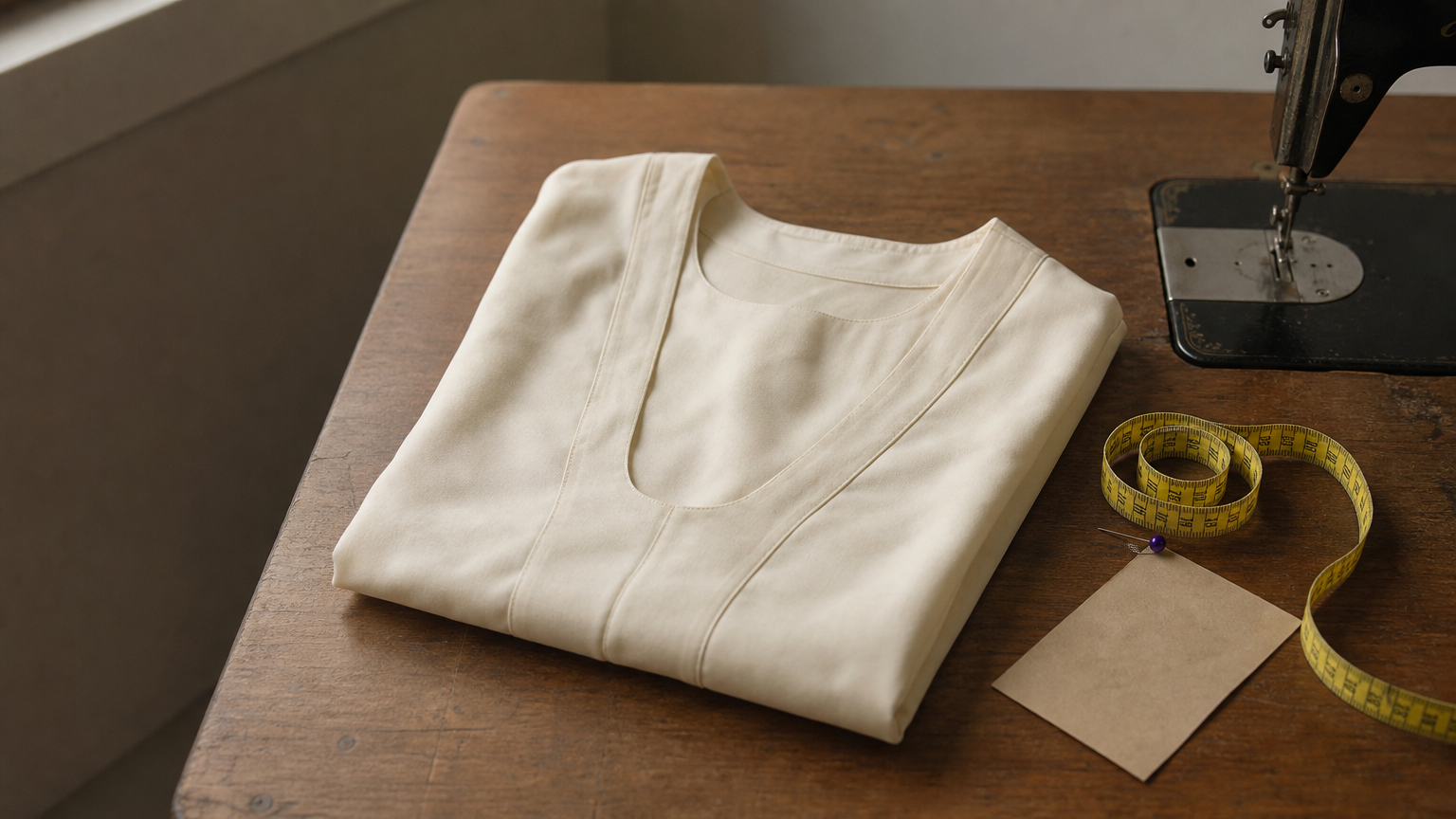
Tailoring is a stitching and alteration business that earns from neighbourhood demand. It stays steady because people always need blouses, kidswear fixes and festive outfits.
How it works
Take orders for blouses, kurtas, school uniform alterations and kidswear, and keep a measurement register for each customer. Specialising helps. Blouse designing, maternity adjustments and ethnicwear customisation let you charge more than a general alteration shop. If you do not stitch yourself, you can run a home boutique, design the pieces and hire a tailor to make them.
Word of mouth carries this business. Apartment groups, school parents and wedding families send repeat orders, so photograph your finished work and share it in local WhatsApp groups.
What it costs and earns
Your main cost is a sewing machine and basic tools. Prices vary by brand, so compare dealers and consider a good second-hand machine. Income depends on volume. If you stitch 40 blouses a month at ₹350 each, that is ₹14,000 in stitching charges. Festive months can double the workload without doubling your hours if you plan ahead.
Take on only as many festive orders as you can deliver on the promised date.
Who it suits and what to watch
This suits women who already stitch well, or who have a design eye and can manage a tailor. The danger is the Diwali and wedding rush, when late deliveries damage your name.
- Collect a part payment when you take the order.
- Write the delivery date on a slip and give it to the customer.
- Stop accepting orders once your calendar is full.
3. Online tutoring
Online tutoring means teaching school subjects or skills to small groups over a video call. It has almost no startup cost and strong retention, because parents rarely switch a tutor once a child improves.
How it works
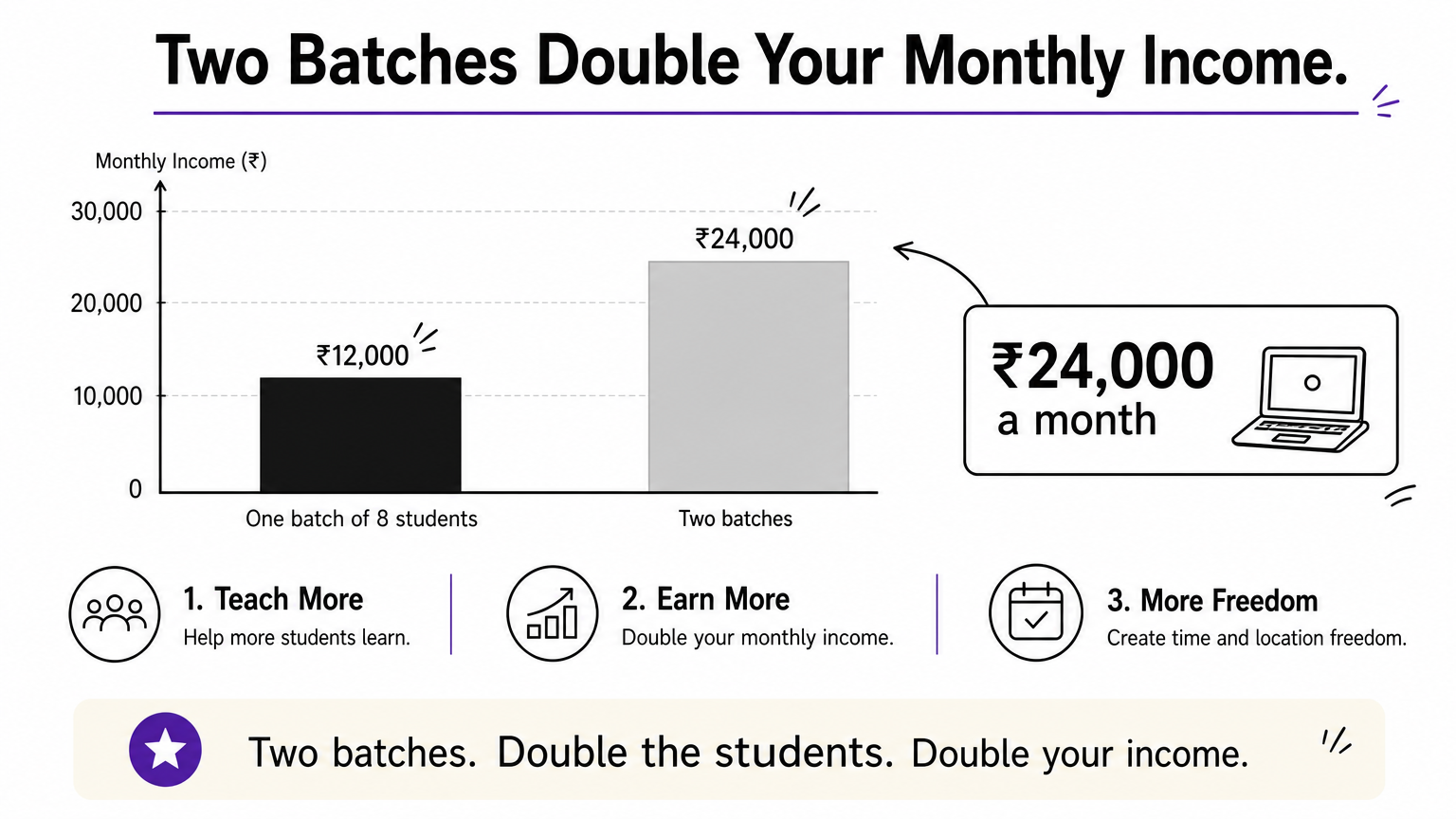
Teach on Google Meet or Zoom using a phone, laptop or tablet. A narrow niche beats “all subjects.” Good options include phonics and early reading, spoken English, handwriting, coding, art, music and exam batches for one class or board. Teach in batches of six to eight students instead of one-to-one. Batches raise your hourly earnings and fix your timetable.
Your first students come from your own circle: school parent groups, neighbours and relatives. Offer a free demo class, then ask satisfied parents to refer others.
What it costs and earns
You need a working device, steady internet and a notebook or tablet for writing. Here is an illustrative month:
- One batch of 8 students at ₹1,500 a month: ₹12,000
- Two batches at different times: ₹24,000
A batch of eight at a fair fee beats ten one-to-one students at a discount.
Who it suits and what to watch
This suits former teachers, graduates and anyone with a subject she explains well. Most new tutors underprice and then overextend. Decide your fee and batch size before the first demo class.
If you teach live classes, use one booking link to take registrations and advance fees. Pi-Square supports classes and registrations with advance payments, so parents do not have to chase you on chat. Collect the fee before the month starts, not after.
4. Freelance writing, design and social media
Freelancing means selling a skill, such as writing, design or social media management, to businesses that need it. It needs no inventory, and your income grows as your skill and client list grow.
How it works
Small shops, cafes, clinics and coaching classes need Instagram posts, product descriptions, website text and simple designs. Do not sell “hours.” Sell packages a client can understand, such as 12 Instagram posts a month, or a month of captions plus a WhatsApp broadcast. Packages make pricing and renewals simple.
Find your first clients through LinkedIn, local business owners you know and freelance platforms. Most stable freelancers end up growing mainly through referrals.
What it costs and earns
Your costs are a laptop, internet and tools such as Canva. Your real investment is time spent building samples. Here is an illustrative month: three retainer clients at ₹8,000 each give you ₹24,000. Landing the first client is the slowest part, so start with two or three samples tailored to a business type you can reach easily.
Sell a clear monthly package, not hours, and your income becomes predictable.
Who it suits and what to watch
This suits graduates, working professionals, career returners and anyone who writes or designs well. It can also run alongside a job. The usual problems are scope creep and late payment.
- Write down exactly what each package includes and how many revisions you offer.
- Take 50% in advance and the rest on delivery.
- Raise your price after your third client, not after your tenth.
5. Handmade gifts and crafts
Handmade gifts and crafts are personalised products you make in small batches, such as candles, hampers, crochet items, resin art and framed keepsakes. They sell best when you market them around occasions like weddings, baby showers and festivals.
How it works
Pick one gifting occasion and build a small range around it. Bundles usually outsell single items, because a hamper looks like a complete present. Take custom orders, such as a name on a frame or a colour theme for a baby shower, and show clear photos of each finished piece.
Customers often want options like colour, size, gift packing and a custom message. In a Pi-Square catalog you can set product variants, gift packing and custom notes, so those details sit with the order instead of getting lost in chat.
What it costs and earns
Buy materials in small batches until you know what sells. Count packaging and courier damage in your costs, since they cut profit more than most beginners expect. An illustrative hamper costs ₹600 in materials and packaging and sells for ₹1,000. That leaves ₹400 before shipping. Thirty hampers in a festive month give about ₹12,000, and your time is not counted yet.
The Pi-Square Free plan allows 100 items and 100 orders a month, which is enough to test a craft business. The Pro plan at ₹300 a month removes the order limit.
Price a handmade item for your time as well as your materials, or the hobby will never become a business.
Who it suits and what to watch
This suits patient, creative people who enjoy repeating a design well, and it works as a weekend side business too. If you sell soaps, oils or other cosmetics, check the applicable manufacturing and labelling rules before you take orders. Homemade food gifts fall under FSSAI rules too. Test small batches and ask for honest feedback before you scale.
6. Reselling on WhatsApp and Instagram
Reselling means buying a narrow range of products from a wholesaler and selling them to your own network online. It is the easiest online idea to start, and the one where careful tracking matters most.
How it works
Choose one category you understand, such as kurtis, sarees, kidswear, jewellery or home organisers, and one type of customer. Post your stock in WhatsApp groups and on Instagram, confirm orders on chat and ship by courier. Dropshipping is a lighter version where the supplier ships for you, but you still carry the risk of poor quality and late delivery.
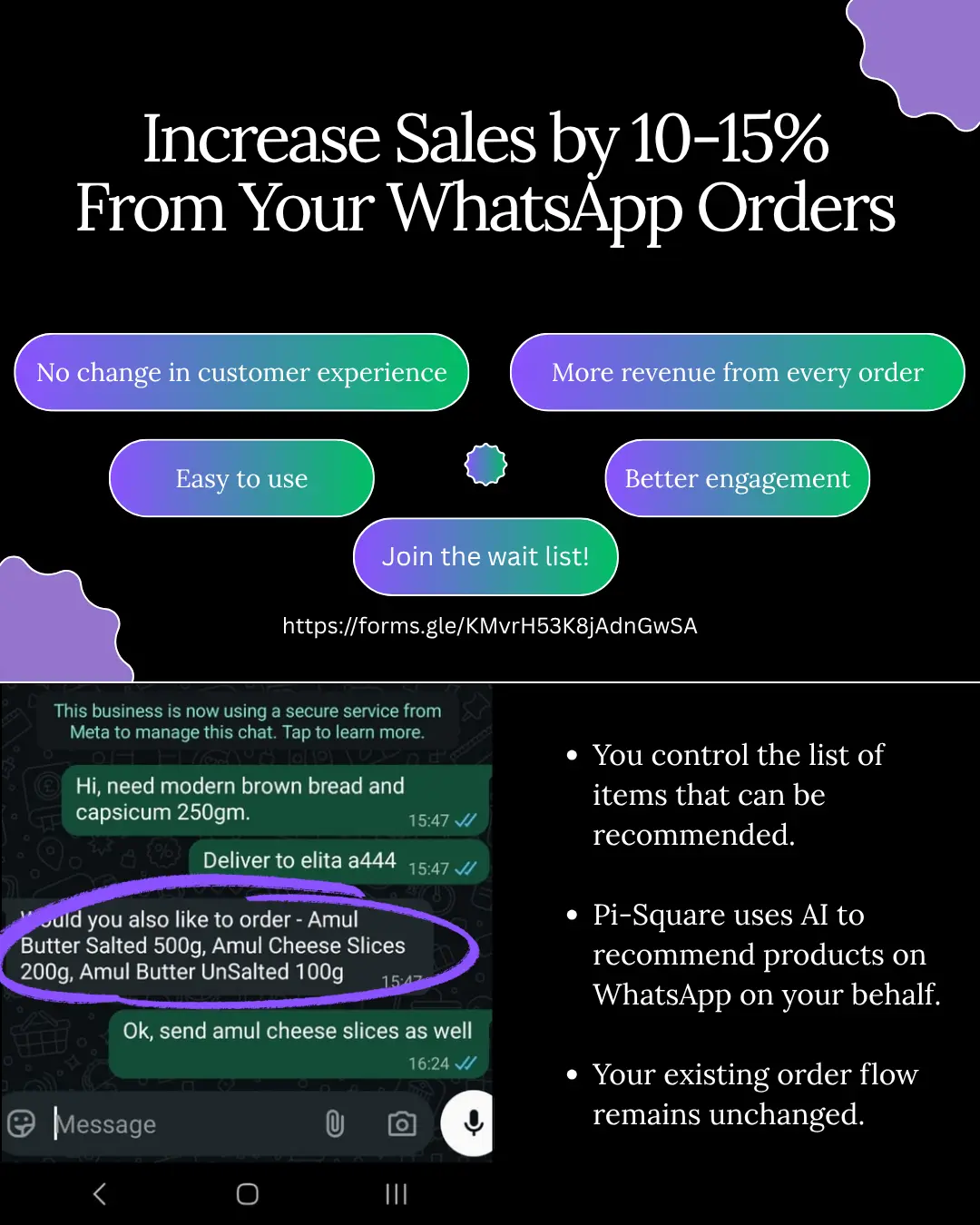
Orders pile up fast on chat. A seller link with a catalog, a checkout and order status keeps them in one place. Pi-Square also offers WhatsApp Upsells, which suggest relevant add-ons during WhatsApp ordering. It charges 10% only on the additional sales it creates.
What it costs and earns
Start with a small stock and reorder only what sells. Illustrative maths: buy 30 pieces at ₹400 and sell them at ₹650 for ₹250 margin each, or ₹7,500 in total. Subtract shipping, returns and any discounts. Payment gateway fees typically run around 2% of order value, charged by the gateway and not by Pi-Square.
Who it suits and what to watch
This suits sociable people who are comfortable talking to customers on chat, and it fits around a job or study schedule. Margins shrink through heavy discounts, shipping costs and returns, so track each of them.
- GST registration becomes mandatory above ₹40 lakh turnover for goods and ₹20 lakh for services, with lower limits in some states. Selling across states or on marketplaces may need registration earlier, so confirm with a tax advisor.
- Pi-Square can generate GST compliant invoices through simple settings, which keeps your records clean if you register.
- Be honest in photos. Returns are costly when the product looks different from the listing.
Start with one idea and test it small
All six ideas work for the same reasons. They use a skill you already have, cost little to test and bring repeat customers. Pick the one that fits your hours, run it with five to ten paying customers, and watch what they renew before you spend more. Keep a simple record of orders, payments and costs from day one, because that record is what lets a small idea grow.
If you choose a business that sells products, services or classes, you can create a free Pi-Square link to share your catalog, take orders and keep payments organised from your phone.