Blog
9 Ideas of Home Based Business to Start with Low Investment
Explore 9 ideas of home based business for India, from baking to freelancing, with startup costs, worked income examples and who each one suits.
Published October 24, 2026
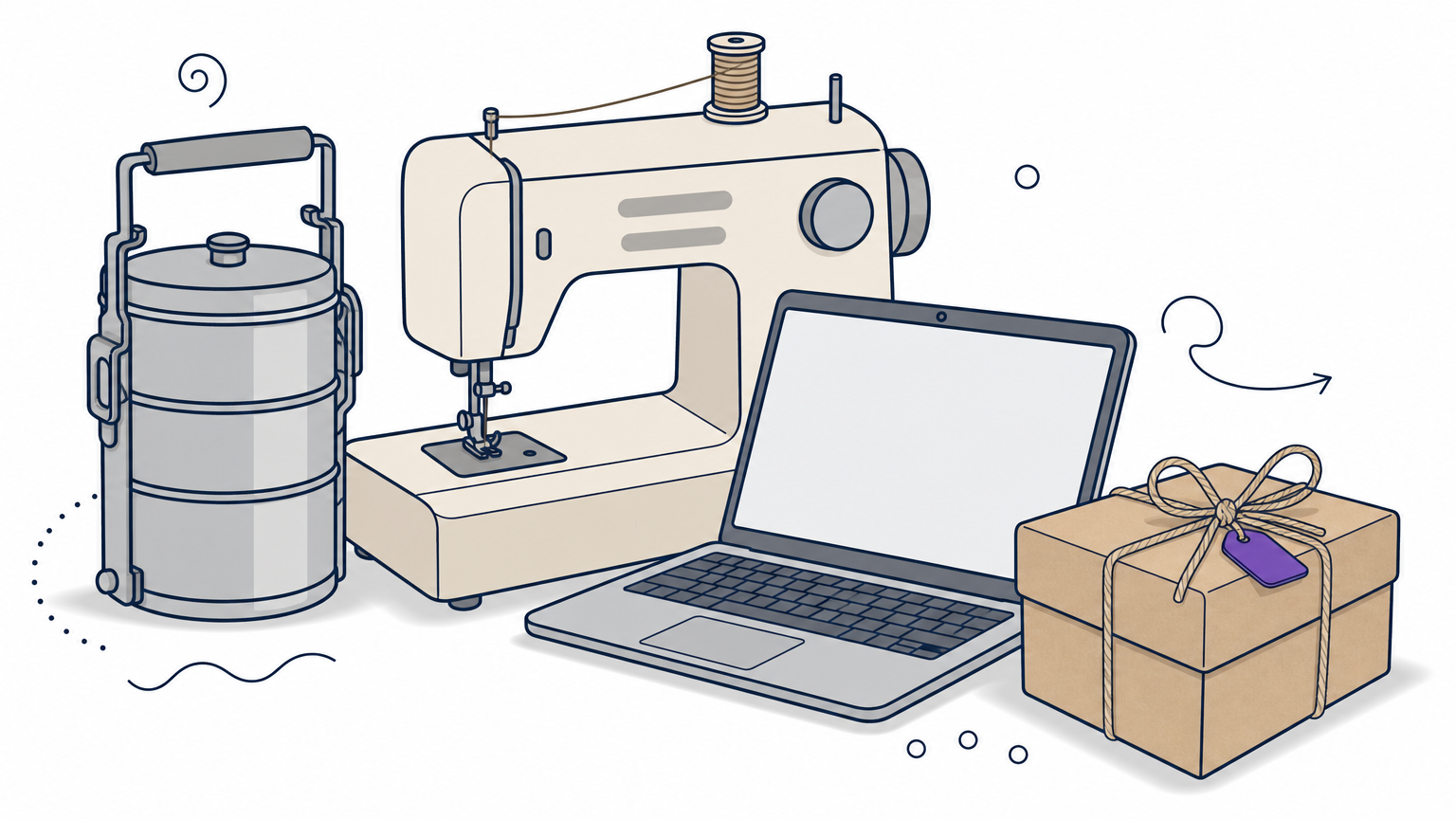
The strongest ideas of home based business for most people in India use a skill you already have and need little more than a phone, a laptop or your kitchen. Baking and tiffin services suit anyone with a good kitchen. Tutoring, freelancing and bookkeeping suit people with a professional skill. Handmade gifts, reselling and tailoring suit people who like making or sourcing physical products. Each option below can start with a modest budget, and several can start with almost nothing.
The real problem is not a shortage of business ideas for home. It is choosing one that fits your skills, your free hours and your savings, then getting your first customers without a shop. Many beginners also find that orders pile up in WhatsApp chats, payments go untracked and follow-ups get forgotten.
This article covers nine practical options, both online and offline. For each one you get how it works, what it costs, who it suits and a simple worked example, so you can judge the numbers yourself. Pi-Square helps small sellers in India take orders, bookings and payments through one link, so where a tool makes the idea easier to run, we say how.
1. Home bakery and tiffin service
A home bakery or tiffin service works because people buy food every day, and you can cook from your own kitchen against orders taken in advance. It is the most direct of the offline home business ideas, and it rewards a narrow specialty.

How it works and how to start
You cook to order, so you carry no unsold stock if you collect orders a day or two ahead. Pick a specialty such as eggless cakes, festival hampers, millet snacks or weekday lunch boxes. Customers find you through Instagram, WhatsApp status and word of mouth. Selling food also means you must check FSSAI registration rules, because the level you need depends on your turnover.
- Fix a menu of 5 to 8 items with clear prices and photos.
- Register with FSSAI at the level your turnover requires, and check local rules for home kitchens.
- Take advance payment on large or custom orders.
- Share one ordering link instead of retyping the menu in every chat.
Cook to order and collect advance payment, and a home kitchen never sits on unsold stock.
Cost, income and who it suits
Your costs are ingredients, packaging, gas and the registration fee. As an illustration, say you sell 15 cakes a month at ₹1,000 each, and ingredients plus packing cost ₹450 per cake. Revenue is ₹15,000, costs are ₹6,750, and you keep ₹8,250 before your own time and delivery.
This idea suits home cooks who already get compliments and can handle deadlines. Pi-Square has a bakery demo store that shows the setup. Its Free plan allows 100 items and 100 orders a month, which is enough to test demand. You can track UPI and cash payments manually at no cost, and issue GST compliant invoices once you need them.
2. Online tutoring and coaching
Online tutoring works when you teach one subject or exam to one type of student, over a video call, with no premises to rent. It has some of the lowest startup costs among business ideas to run from home.
How it works and how to start
Specific beats general. Instead of “maths tutor”, offer class 8 to 10 maths or spoken English for working adults. Other niches that sell include coding for children, music, school science and exam preparation. You teach on Google Meet or Zoom, and students book a slot and pay in advance.
- Choose one subject and one student group.
- Write a clear session plan and a fixed monthly fee.
- Run a free trial class to build trust.
- Sell class slots through a booking link with advance payment, so you are not chasing money after the lesson.
A narrow subject and a fixed monthly fee turn tutoring into predictable income.
Cost, income and who it suits
You need a laptop, a stable internet connection and a headset. Illustratively, 10 students at ₹2,000 a month for two sessions a week brings in ₹20,000 a month. Your time is the limit, so group batches raise income without adding hours.
Tutoring suits teachers, graduates, retired professionals and anyone with deep subject knowledge. It also suits people who like explaining things patiently. Pi-Square supports classes through booking links, registrations and advance payments, and students need no app. They simply open your link.
3. Freelance writing, design and editing
Freelancing means selling a skill such as writing, graphic design, video editing or web development to clients who pay per project. It needs almost no capital, which is why it appears on nearly every list of low-cost business ideas.
How it works and how to start
Clients hire freelancers when they need work done without a full-time employee. You find them on platforms such as Upwork and Fiverr, on LinkedIn, or through direct outreach to small businesses. Your portfolio matters more than your degree. Three strong samples in one niche beat ten mixed ones.
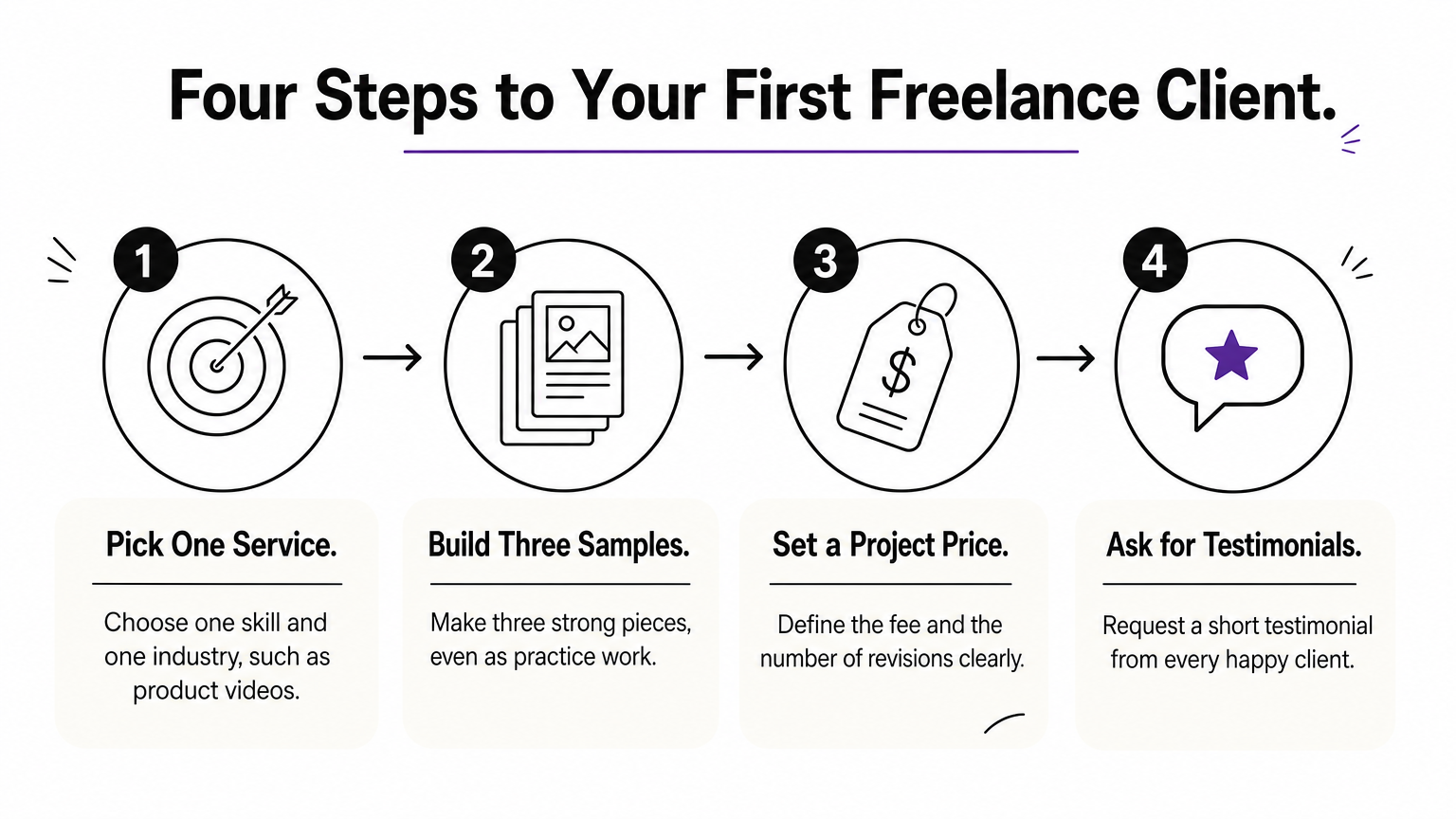
- Pick one service and one industry, for example product videos for D2C brands.
- Build 3 samples, even for friends or as practice pieces.
- Set a clear project price with defined revisions.
- Ask each happy client for a short testimonial you can show to the next one.
Three strong samples in one niche win more clients than a long, mixed portfolio.
Cost, income and who it suits
Costs are a laptop, software and an internet connection. Illustratively, four projects a month at ₹5,000 each gives ₹20,000. Income is uneven at the start, so keep two months of expenses saved before you quit a job.
Freelancing suits people returning from a career break, students with a skill and employees who want a side income. It is a poor fit if you dislike chasing payments and managing deadlines alone.
4. Virtual assistant and bookkeeping support
A virtual assistant handles a busy owner’s admin from home, and bookkeeping support handles their records. Both turn organization into income, and small Indian businesses often need exactly this help.
How it works and how to start
Virtual assistants manage inboxes, calendars, travel bookings, data entry, customer replies and invoice reminders. Bookkeeping support goes a step further by recording sales and expenses and preparing reports. If you understand GST basics, you can help small shops keep clean records. Be careful, though, because filing returns or giving tax advice may need professional qualifications. Offer only what you are qualified to do.
- List the five tasks you do best, and price them as a monthly package.
- Start with one or two clients, then add more as your systems settle.
- Use shared sheets and a simple task tracker so clients see progress.
- Agree on working hours and response times in writing.
Monthly retainers beat hourly billing because they give you income you can plan around.
Cost, income and who it suits
You need a laptop and reliable internet. Illustratively, three clients on ₹12,000 retainers give ₹36,000 a month. Retainers beat hourly billing for planning.
This suits detail-oriented people, former office administrators and commerce graduates. It is quiet, desk-based work with little investment, though it demands reliability. Missed deadlines cost you clients faster than in most other home business ideas.
5. Handmade and customized gifts
Handmade goods work when you make something people cannot easily buy in a store, such as personalized gifts, candles, crochet items or resin art. Customization lets you charge more than mass-produced alternatives.
How it works and how to start
Start with one product you can make well and repeat. Test it with 10 to 20 orders from friends, family and WhatsApp groups before buying materials in bulk. Take orders through Instagram and WhatsApp, and collect custom details such as names, colors and messages before you start making. Price must cover materials, your time and packaging, or you will work hard for little profit. Note that soaps and skincare have extra regulatory rules, so check them before you sell.
- Make a sample set and photograph it in natural light.
- Offer 2 or 3 options such as size, scent or color, not dozens.
- Take advance payment on customized orders.
- Pack neatly, because gift buyers judge you by the unboxing.
Customization is your pricing power, so collect the details before you start making.
Cost, income and who it suits
Illustratively, a candle that costs ₹120 to make and sells for ₹350 leaves ₹230. Selling 40 in a month gives ₹9,200. Margins improve as you buy materials in larger lots.
This idea suits crafters, hobbyists and creative people who enjoy repetitive making. Pi-Square handles the order side with product variants, add-ons, gift packing and custom notes. Customers can pick options and write a message in one link, without a long chat.
6. Reselling clothing and accessories
Reselling means buying ready products at wholesale prices and selling them at a markup, mostly through WhatsApp, Instagram and online marketplaces. It suits people who can spot products customers want but do not want to manufacture anything.
How it works and how to start
You can buy stock from wholesale markets, or use dropshipping, where a supplier ships directly to your customer, so you hold no inventory. Dropshipping is lower risk but gives you thinner margins and less control over quality. A good first step is to buy about 20 pieces in one category, such as kurtis, jewelry or kids’ wear, and sell them to your existing contacts.
- Pick one category and one price band.
- Buy a small first lot and photograph each item clearly.
- Post catalog images on WhatsApp status and Instagram.
- Track stock and returns from day one, so you know your true margin.
Buy a small first lot, because your first twenty sales tell you what to reorder.
Cost, income and who it suits
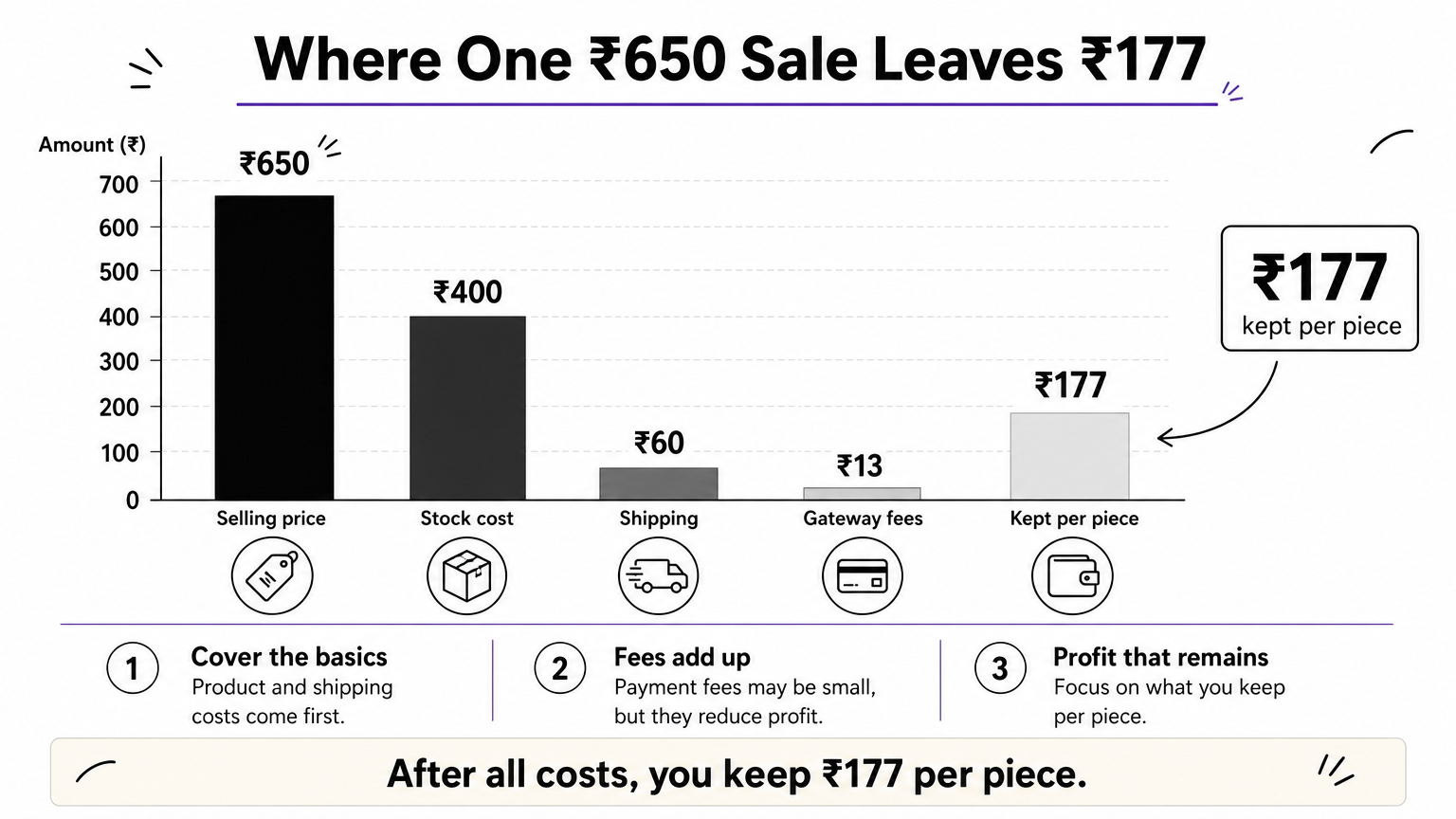
Capital goes into stock, shipping and packaging. Illustratively, you buy at ₹400 and sell at ₹650, leaving ₹250. Take off ₹60 for shipping and about ₹13 in payment gateway fees (roughly 2% of ₹650, though actual fees depend on the gateway), and you keep ₹177 per piece. Fifty sales gives ₹8,850.
Reselling suits people with a good eye for trends and an active social circle. Pi-Square’s Pro plan is ₹300 a month (or ₹3,000 a year) and covers up to 1,000 items, unlimited orders and a custom domain. It also offers real-time inventory tracking and shipping provider integration. Gateway fees go to the gateway, and courier charges go to the shipping provider. Ask a tax advisor about GST registration for your turnover.
7. Tailoring, alterations and boutique work
Tailoring works as a home business because every neighborhood needs stitching, fitting and repairs, and the work comes to you. A sewing machine and good finishing are the main requirements.
How it works and how to start
Begin with services people need often, such as blouse stitching, alterations, hemming and kids’ clothing. As trust builds, move toward custom boutique pieces with higher prices. Customers visit for fittings or send measurements, and you deliver on a promised date. Reliable delivery matters more than speed in this trade.
- List your services and starting prices.
- Record each customer’s measurements and preferences in one place.
- Take an advance on stitching orders to cover fabric and secure the booking.
- Add a price and a notice period for rush jobs.
Reliable delivery dates build a tailoring business faster than low prices do.
Cost, income and who it suits
If you already own a machine, startup cost is small. Illustratively, five alterations a day at ₹150 over 25 working days gives ₹18,750 a month. Custom stitching and boutique pieces lift the average ticket.
This suits anyone with real sewing skill and patience for detail. Pi-Square supports custom notes, advance payments and appointment-style links, so measurements and preferences sit with the order. It also tracks payments, so you can see which customers still owe the balance.
8. Digital products and online courses
Digital products such as templates, planners, recipe ebooks and recorded courses let you create once and sell many times. They suit anyone with knowledge that others will pay to learn.
How it works and how to start
Choose a problem you can solve in a short product. Examples include a meal planner for new mothers, an Excel GST tracker for small shops, or a recorded beginner’s course in Tally or Photoshop. Validate demand before you build. Pre-sell to a small group or ask your audience what they would buy. Do not expect passive income straight away, because early sales come from you promoting actively.
- Test the idea with a free sample and a short poll.
- Build a small first version, not a full course.
- Set a clear price and a simple delivery method.
- Collect payment through a link and deliver the file after payment.
Pre-sell before you build, so the market tells you what is worth creating.
Cost, income and who it suits
Costs are your time, plus basic recording or design tools. Illustratively, a planner priced at ₹499 and sold 40 times brings in ₹19,960. Sales depend on your audience, so build it through useful posts, reels or a WhatsApp community.
This suits teachers, professionals, creators and hobby experts. Pi-Square can collect payments for digital items through a shareable link, and customers need no app. Check the payment gateway charges before you set your price.
9. Social media management for local shops
Social media management means running Instagram and Facebook pages for local businesses such as bakeries, clinics, salons and boutiques. They know they need posts, but they have no time to make them.
How it works and how to start
You plan a content calendar, create posts and reels, reply to comments and report simple results. Choose one local industry first, because you will learn what its customers respond to. Offer a trial month at a discounted price, then move to a fixed package. Clarity on scope prevents arguments, so state how many posts, reels and replies you will handle.
- Pick one industry and audit three local pages as samples.
- Define a monthly package with a set number of posts and reels.
- Agree who supplies photos and who approves posts.
- Send a short monthly report with reach, saves and enquiries.
A clearly scoped monthly package keeps both you and the client happy.
Cost, income and who it suits
You need a smartphone, a laptop and free or low-cost design tools. Illustratively, three clients at ₹8,000 a month give ₹24,000. Results take a few weeks to show, so be honest with clients about timelines.
This fits people who already enjoy Instagram, writing captions and simple editing. It also suits former shop employees who understand local customers. Few other home business ideas combine such low investment with such steady local demand.
Pick one idea and test it small
The best home business is the one that matches your skill, your hours and your budget. Food, handmade goods, reselling and tailoring suit people who like making or sourcing products. Tutoring, freelancing, virtual assistance, digital products and social media management suit people who sell knowledge or time. Start with one idea, test it with a small first group of customers, and only then spend more.
Whatever you choose, set up your orders, payments and follow-ups early, so you are not managing everything through scattered chats. When you are ready to take orders, bookings and payments from one link, you can sell online with your free Pi-Square link and grow from there.